<?xml version="1.0" encoding="utf-8"?><feed xmlns="http://www.w3.org/2005/Atom" ><generator uri="https://jekyllrb.com/" version="3.10.0">Jekyll</generator><link href="https://www.blackwoodgardens.co.uk/feed.xml" rel="self" type="application/atom+xml" /><link href="https://www.blackwoodgardens.co.uk/" rel="alternate" type="text/html" /><updated>2026-03-04T14:51:09+00:00</updated><id>https://www.blackwoodgardens.co.uk/feed.xml</id><title type="html">Blackwood Gardens</title><subtitle>Designing Gardens of all shapes and sizes in East Lothian and Edinburgh</subtitle><author><name>Anna</name></author><entry><title type="html">Spring Forward with Bulbs</title><link href="https://www.blackwoodgardens.co.uk/SpringBulbs" rel="alternate" type="text/html" title="Spring Forward with Bulbs" /><published>2026-03-04T00:00:00+00:00</published><updated>2026-03-04T00:00:00+00:00</updated><id>https://www.blackwoodgardens.co.uk/SpringBulbs</id><content type="html" xml:base="https://www.blackwoodgardens.co.uk/SpringBulbs"><![CDATA[<p>As winter fades and spring arrives, we begin to look forward to longer days and more time outdoors.</p>

<p>It is always a pleasure to see a garden come back to life.</p>

<p><img src="/assets/img/blog14_muscari.jpg" alt="Muscari" />
<em>Moth feeding on muscari</em></p>

<p>Yet many gardens drift quietly into spring rather than making a confident seasonal statement.</p>

<p>Often this is not about size or budget, but about planning.</p>

<p>A lack of early season structure can leave borders feeling flat until summer planting takes over.</p>

<p>Spring is the ideal time to assess your garden honestly and identify where impact is missing.</p>

<h2 id="planning-for-spring-impact">Planning for Spring Impact</h2>
<p>Bulbs are one of the most effective ways to bridge the gap between late winter and early summer. However, spring is not the time to plant them.</p>

<p>It is the time to observe, photograph your borders and plan with intention.</p>

<p>Most spring flowering bulbs are planted in autumn, from October through November, with tulips best planted slightly later into November and December.</p>

<p>Ordering early from specialist suppliers ensures access to the best cultivars and allows for a considered approach to colour, height and flowering sequence.</p>

<p>In my design work, bulb selection is never an afterthought.</p>

<p><img src="/assets/img/blog14_tulips.jpg" alt="Tulip display" />
<em>Tulip display</em></p>

<p>It is about understanding how a garden unfolds through the seasons and placing bulbs where they enhance structure rather than compete with it.</p>

<p>Some bulbs, such as tulips, give their best display for only a few years and may need replacing.</p>

<p>Others will naturalise, gradually weaving themselves into the planting and creating a softer, more established character over time.</p>

<p>Bulbs can be integrated into borders, naturalised into grass, or used in containers for controlled seasonal displays.</p>

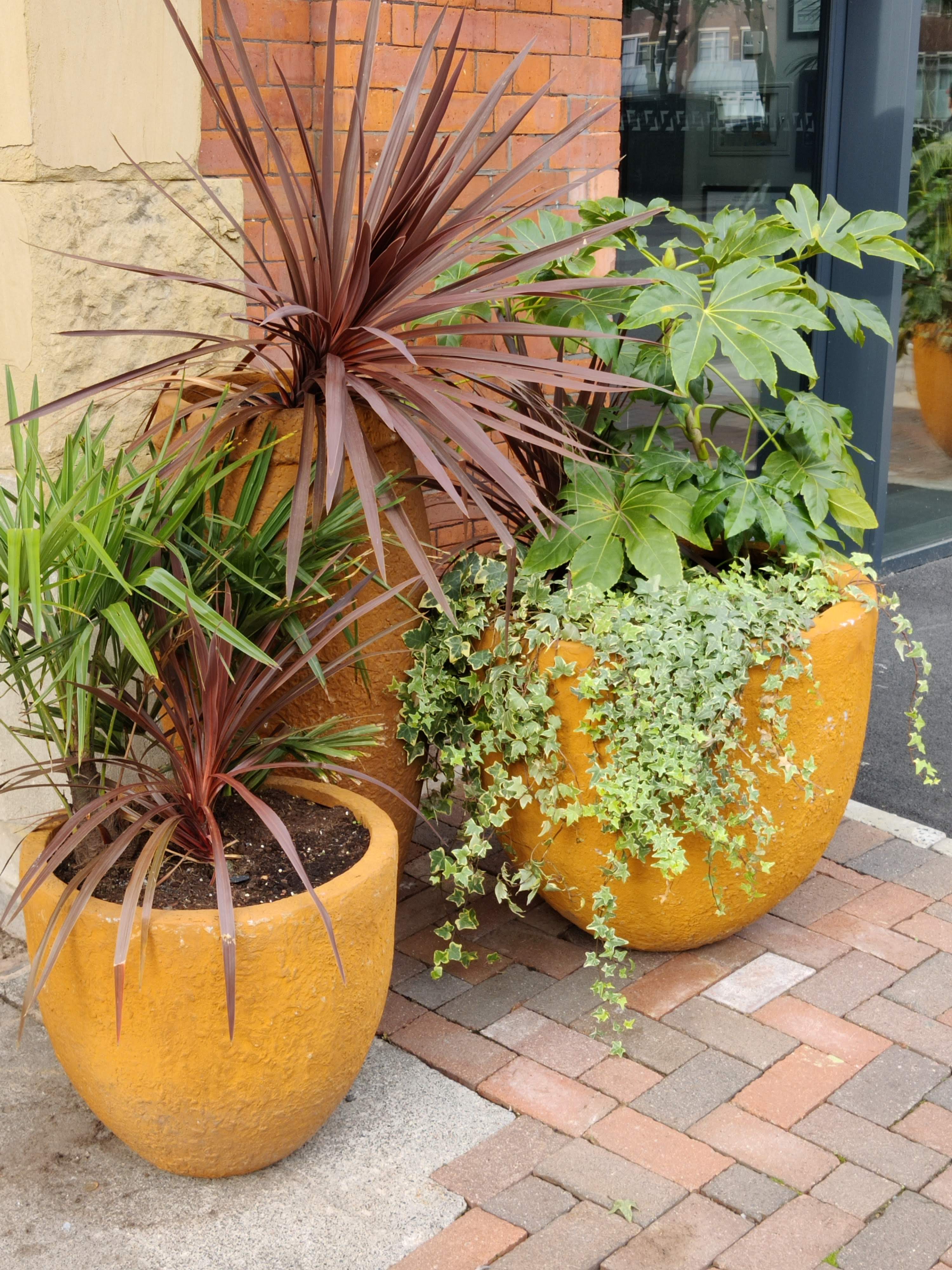
<p>Layering bulbs in pots allows for successive flowering and is particularly useful in smaller urban gardens where every detail matters.</p>

<p>As a rough guide, plant bulbs at a depth of two to three times their size, ensuring the basal plate sits at the base.</p>

<p>If in doubt, plant slightly deeper rather than too shallow.</p>

<h2 id="why-spring-bulbs-are-essential-in-scottish-gardens">Why Spring Bulbs Are Essential in Scottish Gardens</h2>

<p>In Scotland, where winters can feel long and slow to release their grip, spring bulbs are invaluable.</p>

<p>They provide early structure and colour at a time when most herbaceous planting is only just emerging.</p>

<p>Used thoughtfully, bulbs add rhythm and repetition across a garden. They can draw the eye along a pathway, soften the edge of a terrace or lift a mature border without requiring significant space.</p>

<p>Their versatility makes them an essential design tool rather than simply a seasonal addition.</p>

<h2 id="a-more-considered-approach-to-daffodils">A More Considered Approach to Daffodils</h2>
<p>Daffodils are often dismissed as too bold or untidy.</p>

<p><img src="/assets/img/blog14_narcissus.jpg" alt="Narcissus" />
<em>Narcissus ‘Artic Bells’</em></p>

<p>Yet the Narcissus family offers a remarkable range of refined forms. Dwarf white and cream varieties can sit beautifully within a restrained planting palette.</p>

<p>Narcissus ‘Elka’ is a particularly elegant and reliable choice.
When paired with early perennials such as <em>Omphalodes ‘Cherry Ingram’</em>, daffodils feel intentional rather than incidental. 
<img src="/assets/img/blog14_omphalodes.jpg" alt="Omphalodes" />
<em>Omphalodes Cherry Ingram’</em></p>

<p>They are also resilient, standing up well to wind and resisting deer and rabbits, an important consideration in many Scottish settings.</p>

<p>Allow foliage to die back naturally after flowering. Premature cutting will weaken bulbs and compromise future displays.</p>

<h2 id="creating-layered-seasonal-interest">Creating Layered Seasonal Interest</h2>
<p>Early bulbs such as <em>galanthus nivalis</em> (snowdrops), <em>crocuses</em> and <em>Iris reticulata</em> bring delicate detail to the front of borders and beneath deciduous trees.</p>

<p>Snowdrops are best planted in the green, immediately after flowering, to encourage quicker establishment.</p>

<p><em>Anemone blue blanda</em> forms a low carpet of blue in early spring and works well in naturalistic schemes. 
<img src="/assets/img/blog14_anenome.jpg" alt="Anemone" />
<em>Anenome Blue Blanda</em></p>

<p>These lower growing bulbs retreat quietly as summer planting develops, ensuring the garden never feels overcrowded.</p>

<p>As the season progresses, <em>narcissus</em>, <em>tulips</em> and <em>fritillaries</em> provide stronger vertical emphasis.</p>

<p>Limiting colour combinations and selecting varieties that flower simultaneously creates a more cohesive effect, particularly in containers or formal settings.</p>

<p>By late spring, <em>alliums</em> introduce height and architectural presence. Varieties such as <em>Allium christophii</em> and <em>Allium ‘Purple Rain’</em> add sculptural interest and combine beautifully with softer planting.</p>

<p>Grouping bulbs generously creates far greater visual impact than scattering them thinly.</p>

<p>For damp or meadow style planting, <em>Fritillaria meleagris</em> and <em>camassia</em> offer a naturalistic approach that works particularly well in flower meadows.
<img src="/assets/img/blog14_camassia.jpg" alt="Camassia" />
<em>Camassia in a flower meadow</em></p>

<h2 id="designing-for-the-seasons-ahead">Designing for the Seasons Ahead</h2>

<p>If your garden feels underwhelming in early spring, it may not need wholesale change.</p>

<p>Often it requires thoughtful layering and better seasonal sequencing.</p>

<p>Taking time now to review your garden and plan ahead for autumn planting can transform how it feels next year.</p>

<p>Well placed bulbs bring structure, continuity and a sense of considered design from the very start of the gardening year.</p>

<p>A garden should offer interest in every season. Spring bulbs are one of the simplest and most effective ways to achieve that.</p>]]></content><author><name>Anna</name></author><category term="chat" /><category term="chat" /><summary type="html"><![CDATA[As winter fades and spring arrives, we begin to look forward to longer days and more time outdoors. It is always a pleasure to see a garden come back to life. Moth feeding on muscari Yet many gardens drift quietly into spring rather than making a confident seasonal statement. Often this is not about size or budget, but about planning. A lack of early season structure can leave borders feeling flat until summer planting takes over. Spring is the ideal time to assess your garden honestly and identify where impact is missing. Planning for Spring Impact Bulbs are one of the most effective ways to bridge the gap between late winter and early summer. However, spring is not the time to plant them. It is the time to observe, photograph your borders and plan with intention. Most spring flowering bulbs are planted in autumn, from October through November, with tulips best planted slightly later into November and December. Ordering early from specialist suppliers ensures access to the best cultivars and allows for a considered approach to colour, height and flowering sequence. In my design work, bulb selection is never an afterthought. Tulip display It is about understanding how a garden unfolds through the seasons and placing bulbs where they enhance structure rather than compete with it. Some bulbs, such as tulips, give their best display for only a few years and may need replacing. Others will naturalise, gradually weaving themselves into the planting and creating a softer, more established character over time. Bulbs can be integrated into borders, naturalised into grass, or used in containers for controlled seasonal displays. Layering bulbs in pots allows for successive flowering and is particularly useful in smaller urban gardens where every detail matters. As a rough guide, plant bulbs at a depth of two to three times their size, ensuring the basal plate sits at the base. If in doubt, plant slightly deeper rather than too shallow. Why Spring Bulbs Are Essential in Scottish Gardens In Scotland, where winters can feel long and slow to release their grip, spring bulbs are invaluable. They provide early structure and colour at a time when most herbaceous planting is only just emerging. Used thoughtfully, bulbs add rhythm and repetition across a garden. They can draw the eye along a pathway, soften the edge of a terrace or lift a mature border without requiring significant space. Their versatility makes them an essential design tool rather than simply a seasonal addition. A More Considered Approach to Daffodils Daffodils are often dismissed as too bold or untidy. Narcissus ‘Artic Bells’ Yet the Narcissus family offers a remarkable range of refined forms. Dwarf white and cream varieties can sit beautifully within a restrained planting palette. Narcissus ‘Elka’ is a particularly elegant and reliable choice. When paired with early perennials such as Omphalodes ‘Cherry Ingram’, daffodils feel intentional rather than incidental. Omphalodes Cherry Ingram’ They are also resilient, standing up well to wind and resisting deer and rabbits, an important consideration in many Scottish settings. Allow foliage to die back naturally after flowering. Premature cutting will weaken bulbs and compromise future displays. Creating Layered Seasonal Interest Early bulbs such as galanthus nivalis (snowdrops), crocuses and Iris reticulata bring delicate detail to the front of borders and beneath deciduous trees. Snowdrops are best planted in the green, immediately after flowering, to encourage quicker establishment. Anemone blue blanda forms a low carpet of blue in early spring and works well in naturalistic schemes. Anenome Blue Blanda These lower growing bulbs retreat quietly as summer planting develops, ensuring the garden never feels overcrowded. As the season progresses, narcissus, tulips and fritillaries provide stronger vertical emphasis. Limiting colour combinations and selecting varieties that flower simultaneously creates a more cohesive effect, particularly in containers or formal settings. By late spring, alliums introduce height and architectural presence. Varieties such as Allium christophii and Allium ‘Purple Rain’ add sculptural interest and combine beautifully with softer planting. Grouping bulbs generously creates far greater visual impact than scattering them thinly. For damp or meadow style planting, Fritillaria meleagris and camassia offer a naturalistic approach that works particularly well in flower meadows. Camassia in a flower meadow Designing for the Seasons Ahead If your garden feels underwhelming in early spring, it may not need wholesale change. Often it requires thoughtful layering and better seasonal sequencing. Taking time now to review your garden and plan ahead for autumn planting can transform how it feels next year. Well placed bulbs bring structure, continuity and a sense of considered design from the very start of the gardening year. A garden should offer interest in every season. Spring bulbs are one of the simplest and most effective ways to achieve that.]]></summary><media:thumbnail xmlns:media="http://search.yahoo.com/mrss/" url="https://www.blackwoodgardens.co.uk/blog14_allium.jpg" /><media:content medium="image" url="https://www.blackwoodgardens.co.uk/blog14_allium.jpg" xmlns:media="http://search.yahoo.com/mrss/" /></entry><entry><title type="html">Trees For Small Gardens</title><link href="https://www.blackwoodgardens.co.uk/Trees" rel="alternate" type="text/html" title="Trees For Small Gardens" /><published>2026-02-04T00:00:00+00:00</published><updated>2026-02-04T00:00:00+00:00</updated><id>https://www.blackwoodgardens.co.uk/Trees</id><content type="html" xml:base="https://www.blackwoodgardens.co.uk/Trees"><![CDATA[<p>When planning a new garden with limited space, it’s easy to assume there simply isn’t room for a tree or that a tree will cast too much shade.</p>

<p>In reality, there are many beautiful trees that thrive in Scotland and are well suited to smaller gardens.</p>

<p>The key is careful selection.</p>

<p>Most gardens can accommodate a tree.</p>

<p>It is about choosing the right one for the space and positioning it thoughtfully.</p>

<p>If you are unsure which tree is appropriate for your garden, this guide will help you make an informed decision.</p>

<h2 id="the-benefits-of-trees-in-a-garden">The Benefits of Trees in a Garden</h2>
<p>Trees introduce vertical interest, an essential element of well-considered garden design. 
They allow planting to be layered, with trees and shrubs followed by perennials, bulbs and ground cover. 
This creates depth, richness and year-round interest.</p>

<p>A tree’s height is particularly effective at softening boundaries and can make a garden feel larger than it really is.</p>

<p>When positioned carefully, trees can also provide privacy, screen neighbouring buildings or disguise unsightly views.</p>

<p>Trees make excellent focal points, so their position should be chosen deliberately to support the overall design of the garden.</p>

<p>In new gardens, planting a tree helps the space settle more quickly. While it is not instant impact, selecting a good-sized specimen can anchor the design and help the garden feel established sooner.</p>

<p>Trees also offer long seasons of interest. 
Deciduous trees, even when bare in winter, reveal beautiful structure and silhouette, clearly marking the changing seasons.
<img src="/assets/img/blog11_sorbus.jpg" alt="Tree silhouette" /></p>

<p>Trees are invaluable for wildlife. If you enjoy seeing birds in your garden, planting trees, particularly those with blossom and berries, will significantly increase biodiversity and bring more life into the space.</p>

<p><img src="/assets/img/blog11_sorbus%20berries.jpg" alt="berries" /></p>
<h2 id="is-it-a-tree-or-a-shrub">Is It a Tree or a Shrub?</h2>

<p>The main difference is that a tree has a clear trunk that branches some distance above ground level, while shrubs tend to branch from much lower down.</p>

<p>In practice, the distinction is not always clear, as some shrubs grow very large and function much like small trees.</p>

<p>Some mature shrubs can be trained to look more tree-like by lifting the canopy and exposing the stems.</p>

<p>Ultimately, the definition matters less than understanding the plant’s mature height and spread, which is crucial when planning for long-term success in a smaller garden.</p>

<h2 id="tree-shapes-and-forms">Tree Shapes and Forms</h2>
<p>Trees come in a wide range of shapes and forms, and not all are tall or wide. The natural habit of a tree, along with propagation methods and pruning, will determine its overall appearance.</p>
<h4 id="weeping-trees">Weeping trees</h4>
<p>These have branches that fall towards the ground, such as <em>Salix caprea ‘Kilmarnock’</em>.</p>

<h4 id="columnar-and-fastigiate-trees">Columnar and fastigiate trees</h4>
<p>These are ideal where space is tight or where screening is required.</p>

<p>Fastigiate trees have branches that grow upright, parallel to the trunk, while columnar trees have short branches held close to the main stem.</p>

<p>Examples include <em>Prunus ‘Amanogawa’</em> and <em>Taxus baccata ‘Fastigiata’</em>.</p>

<h4 id="round-or-globe-shaped-trees">Round or globe-shaped trees</h4>
<p>These are naturally rounded forms that require little pruning, such as <em>Malus ‘Magdeburgensis’</em>.</p>

<h4 id="multi-stemmed-trees">Multi-stemmed trees</h4>
<p>Often created through pruning during propagation, multi-stemmed trees have a strong sculptural quality and are popular in contemporary garden design.</p>

<p>Other forms can be created through pruning, including pleached, box-headed and parasol trees. 
These require ongoing maintenance but can be very effective.</p>

<p>Pleached trees are particularly useful for screening and privacy. 
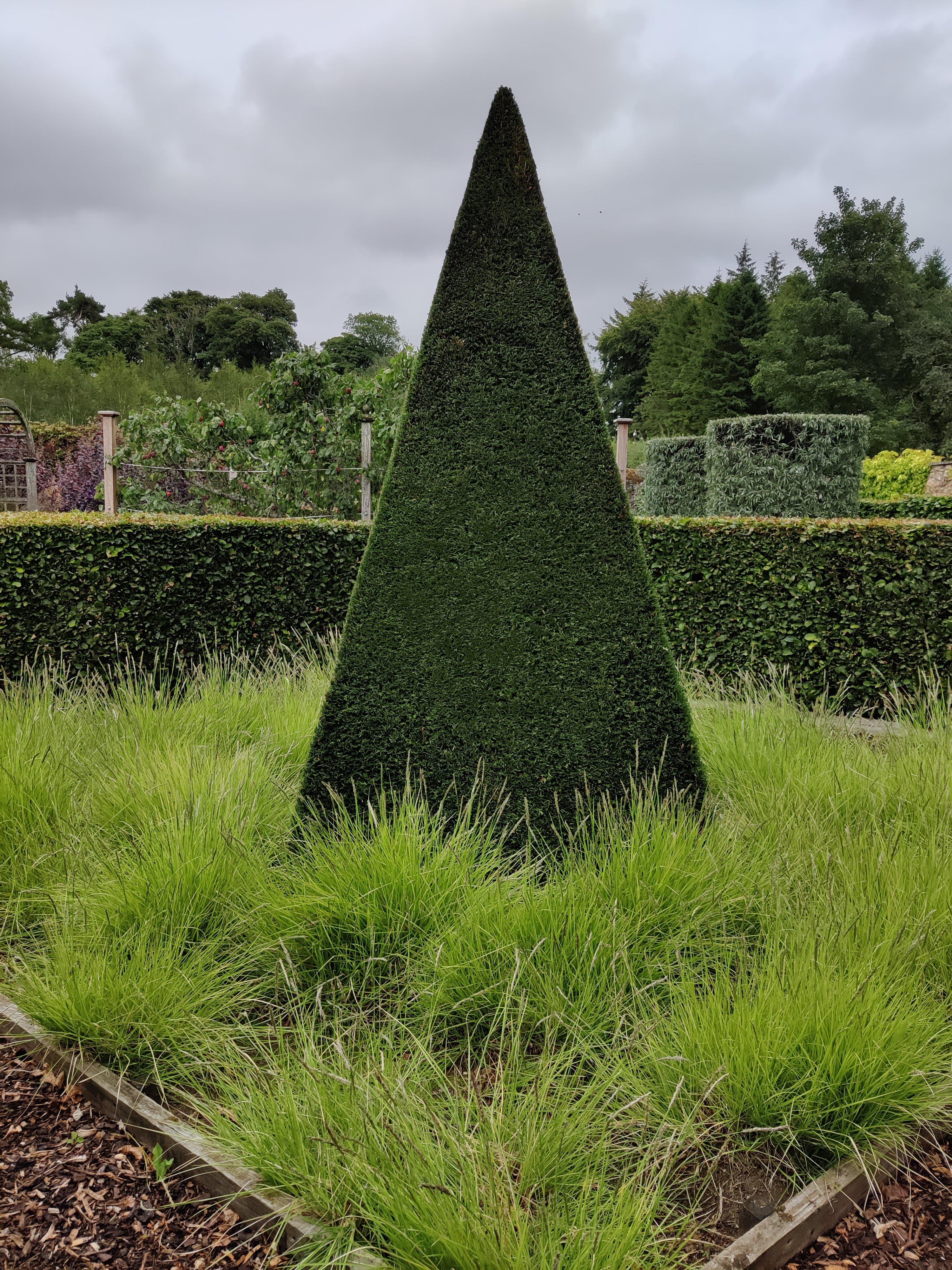
Box-headed trees create architectural structure and can be used to zone different areas of the garden.</p>

<p>Parasol trees are useful where shade is required.</p>

<h2 id="evergreen-or-deciduous">Evergreen or deciduous?</h2>
<p>A mix is usually best.</p>

<p>Deciduous trees offer greater seasonal interest, while evergreens provide structure in winter.</p>

<p>Too many evergreens can result in a garden that feels uninspiring.</p>

<h2 id="planting-trees">Planting Trees</h2>
<h4 id="choosing-and-buying-trees">Choosing and Buying Trees</h4>
<p>Trees are sold in many forms, from whips and saplings to semi-mature specimens.</p>

<p>There are Industry standards for purchasing a tree which professionals use to specify trees so they receive the exact size, form and quality.</p>

<p>If you are selecting a tree yourself rather than working with a garden designer, visit a reputable nursery and view the tree in situ.</p>

<p>Read labels carefully to understand its ultimate size and growth rate.</p>

<p>Proper research is essential to avoid planting something that will outgrow its space and cause problems in the future.</p>

<p>Trees are available either bare-root or container-grown.</p>

<p>Bare-root trees must be planted on arrival and are only available during the winter dormant season.</p>

<p>Container-grown trees can be planted throughout the year, although spring and autumn offer the best conditions.</p>

<p>Watering is critical during the establishment period and may be required for up to two years.</p>

<p>Many trees will also need staking to ensure they grow upright and develop a strong root system</p>

<h2 id="where-to-plant">Where to Plant</h2>
<p>The correct position will depend on the species and the role the tree plays in the garden.</p>

<p>Shelter is an important consideration.</p>

<p>For example; <em>Acers</em> dislike wind and require a protected location.</p>

<p>Always allow for the tree’s mature spread and avoid planting too close to boundaries or buildings.</p>

<p>Consider sun patterns, the shade the tree will eventually create and prevailing winds.</p>

<p>In more exposed gardens, select species that can tolerate those conditions.</p>

<h2 id="annas-top-trees-for-small-gardens">Anna’s Top Trees for Small Gardens</h2>
<h4 id="sorbus-rowan">Sorbus (Rowan)</h4>
<p>Excellent for small gardens, with a wide range of berry colours and strong seasonal interest. 
Loved by wildlife.
<em>Sorbus ‘Joseph Rock’</em> is a narrow form with striking yellow berries.
<img src="/assets/img/blog11_autumnleaf.jpg" alt="autumn leaf" />
*Sorbus autumn colour *</p>

<h4 id="malus-evereste"><em>Malus ‘Evereste’</em></h4>
<p>A crab apple with beautiful white blossom and an abundance of fruit in the autumn, making it good for wildlife value.</p>

<p>Tough trees which will tolerance  a wide range of conditions.
<img src="/assets/img/blog11_blossom.jpg" alt="Blossomsultation" />
<em>Crab apple tree blossom in spring</em></p>

<h4 id="amelanchier-robin-hill"><em>Amelanchier ‘Robin Hill’</em></h4>
<p>Pink blossom, copper foliage and berries. Also known as serviceberry.</p>

<p>Reliable in damp or windy conditions.</p>

<h4 id="acer-griseum"><em>Acer griseum</em></h4>
<p>Outstanding peeling bark that stands out in winter, combined with exceptional autumn colour.</p>

<h4 id="betula-jacquemontii-multi-stemmed"><em>Betula jacquemontii</em> (multi-stemmed)</h4>
<p>Vibrant white bark and a light, dappled canopy.</p>

<h4 id="prunus-amanogawa"><em>Prunus ‘Amanogawa’</em></h4>
<p>A very narrow flowering cherry with soft pink blossom, ideal for tight spaces.</p>

<h4 id="cornus-kousa-china-girl"><em>Cornus kousa ‘China Girl’</em></h4>
<p>A beautiful flowering tree with late spring to early summer interest.</p>

<h4 id="prunus-lusiticana"><em>Prunus lusiticana</em></h4>
<p>Evergreen  with dark red shoots and white fragrant flowers.</p>

<p>Good for topiary.</p>

<h2 id="time-for-trees">Time for trees</h2>

<p>Lets hope I have inspired you to plant a tree in your garden.</p>]]></content><author><name>Anna</name></author><category term="chat" /><category term="chat" /><summary type="html"><![CDATA[When planning a new garden with limited space, it’s easy to assume there simply isn’t room for a tree or that a tree will cast too much shade. In reality, there are many beautiful trees that thrive in Scotland and are well suited to smaller gardens. The key is careful selection. Most gardens can accommodate a tree. It is about choosing the right one for the space and positioning it thoughtfully. If you are unsure which tree is appropriate for your garden, this guide will help you make an informed decision. The Benefits of Trees in a Garden Trees introduce vertical interest, an essential element of well-considered garden design. They allow planting to be layered, with trees and shrubs followed by perennials, bulbs and ground cover. This creates depth, richness and year-round interest. A tree’s height is particularly effective at softening boundaries and can make a garden feel larger than it really is. When positioned carefully, trees can also provide privacy, screen neighbouring buildings or disguise unsightly views. Trees make excellent focal points, so their position should be chosen deliberately to support the overall design of the garden. In new gardens, planting a tree helps the space settle more quickly. While it is not instant impact, selecting a good-sized specimen can anchor the design and help the garden feel established sooner. Trees also offer long seasons of interest. Deciduous trees, even when bare in winter, reveal beautiful structure and silhouette, clearly marking the changing seasons. Trees are invaluable for wildlife. If you enjoy seeing birds in your garden, planting trees, particularly those with blossom and berries, will significantly increase biodiversity and bring more life into the space. Is It a Tree or a Shrub? The main difference is that a tree has a clear trunk that branches some distance above ground level, while shrubs tend to branch from much lower down. In practice, the distinction is not always clear, as some shrubs grow very large and function much like small trees. Some mature shrubs can be trained to look more tree-like by lifting the canopy and exposing the stems. Ultimately, the definition matters less than understanding the plant’s mature height and spread, which is crucial when planning for long-term success in a smaller garden. Tree Shapes and Forms Trees come in a wide range of shapes and forms, and not all are tall or wide. The natural habit of a tree, along with propagation methods and pruning, will determine its overall appearance. Weeping trees These have branches that fall towards the ground, such as Salix caprea ‘Kilmarnock’. Columnar and fastigiate trees These are ideal where space is tight or where screening is required. Fastigiate trees have branches that grow upright, parallel to the trunk, while columnar trees have short branches held close to the main stem. Examples include Prunus ‘Amanogawa’ and Taxus baccata ‘Fastigiata’. Round or globe-shaped trees These are naturally rounded forms that require little pruning, such as Malus ‘Magdeburgensis’. Multi-stemmed trees Often created through pruning during propagation, multi-stemmed trees have a strong sculptural quality and are popular in contemporary garden design. Other forms can be created through pruning, including pleached, box-headed and parasol trees. These require ongoing maintenance but can be very effective. Pleached trees are particularly useful for screening and privacy. Box-headed trees create architectural structure and can be used to zone different areas of the garden. Parasol trees are useful where shade is required. Evergreen or deciduous? A mix is usually best. Deciduous trees offer greater seasonal interest, while evergreens provide structure in winter. Too many evergreens can result in a garden that feels uninspiring. Planting Trees Choosing and Buying Trees Trees are sold in many forms, from whips and saplings to semi-mature specimens. There are Industry standards for purchasing a tree which professionals use to specify trees so they receive the exact size, form and quality. If you are selecting a tree yourself rather than working with a garden designer, visit a reputable nursery and view the tree in situ. Read labels carefully to understand its ultimate size and growth rate. Proper research is essential to avoid planting something that will outgrow its space and cause problems in the future. Trees are available either bare-root or container-grown. Bare-root trees must be planted on arrival and are only available during the winter dormant season. Container-grown trees can be planted throughout the year, although spring and autumn offer the best conditions. Watering is critical during the establishment period and may be required for up to two years. Many trees will also need staking to ensure they grow upright and develop a strong root system Where to Plant The correct position will depend on the species and the role the tree plays in the garden. Shelter is an important consideration. For example; Acers dislike wind and require a protected location. Always allow for the tree’s mature spread and avoid planting too close to boundaries or buildings. Consider sun patterns, the shade the tree will eventually create and prevailing winds. In more exposed gardens, select species that can tolerate those conditions. Anna’s Top Trees for Small Gardens Sorbus (Rowan) Excellent for small gardens, with a wide range of berry colours and strong seasonal interest. Loved by wildlife. Sorbus ‘Joseph Rock’ is a narrow form with striking yellow berries. *Sorbus autumn colour * Malus ‘Evereste’ A crab apple with beautiful white blossom and an abundance of fruit in the autumn, making it good for wildlife value. Tough trees which will tolerance a wide range of conditions. Crab apple tree blossom in spring Amelanchier ‘Robin Hill’ Pink blossom, copper foliage and berries. Also known as serviceberry. Reliable in damp or windy conditions. Acer griseum Outstanding peeling bark that stands out in winter, combined with exceptional autumn colour. Betula jacquemontii (multi-stemmed) Vibrant white bark and a light, dappled canopy. Prunus ‘Amanogawa’ A very narrow flowering cherry with soft pink blossom, ideal for tight spaces. Cornus kousa ‘China Girl’ A beautiful flowering tree with late spring to early summer interest. Prunus lusiticana Evergreen with dark red shoots and white fragrant flowers. Good for topiary. Time for trees Lets hope I have inspired you to plant a tree in your garden.]]></summary><media:thumbnail xmlns:media="http://search.yahoo.com/mrss/" url="https://www.blackwoodgardens.co.uk/blog11_betula.jpg" /><media:content medium="image" url="https://www.blackwoodgardens.co.uk/blog11_betula.jpg" xmlns:media="http://search.yahoo.com/mrss/" /></entry><entry><title type="html">New Year - Garden Transformation</title><link href="https://www.blackwoodgardens.co.uk/GardenTransformation" rel="alternate" type="text/html" title="New Year - Garden Transformation" /><published>2026-01-08T00:00:00+00:00</published><updated>2026-01-08T00:00:00+00:00</updated><id>https://www.blackwoodgardens.co.uk/GardenTransformation</id><content type="html" xml:base="https://www.blackwoodgardens.co.uk/GardenTransformation"><![CDATA[<h3 id="the-new-year-is-a-time-to-embrace-change">The New Year is a time to embrace change.</h3>

<p>The festivities are behind us, and it’s the perfect opportunity for a fresh start.</p>

<p>While January may seem like an unlikely time to think about your garden, it is actually an ideal moment to step back and start planning for the year ahead.</p>

<p>At this time of year, the garden reveals its true bones and structure, without the distraction of summer planting.</p>

<p>This makes it much easier to assess the space and decide whether it is really working for you.</p>

<p>If it isn’t, now is the time to ask why.</p>

<p>Below are some common garden problems, along with practical tips and ideas to help you address them.</p>

<h3 id="is-your-garden-overgrown-and-unruly">Is Your Garden Overgrown and Unruly?</h3>

<p>Do you know what plants you have in your garden and how to care for them properly?</p>

<p>A good starting point is to identify each plant and research how and when it should be pruned.</p>

<p>Simple tasks such as cutting hedges and shaping shrubs can make a remarkable difference.</p>

<p>Don’t be afraid to edit out plants you don’t like, don’t want, or simply have too many of.</p>

<p>Giving the remaining plants more space will allow them to perform better and look healthier.</p>

<p>If this feels overwhelming, you can always book a <a href="https://www.blackwoodgardens.co.uk/Consultation">garden consultation</a> with an expert.</p>

<p>A professional can help you decide what to keep and what to remove, and offer practical advice on how to maintain your garden with confidence.</p>

<p><img src="/assets/img/blog10_consultation.jpg" alt="consultation" />
<em>Garden consultation with Anna</em></p>

<h3 id="are-your-borders-working">Are Your Borders Working?</h3>

<p>We’ve all been tempted by beautiful flowering plants at the garden centre.</p>

<p>Unfortunately, this can lead to impulsive purchases and borders that feel chaotic.</p>

<p>Too many colours, too many shapes, everything flowering at once, and then very little interest later in the year.</p>

<p>Garden designers often work with a limited planting palette and repeat key plants throughout the space.</p>

<p>This creates unity, rhythm, and a sense of style. Much like an artist composing a painting, plants are carefully chosen to create an overall picture.</p>

<p>If your garden feels busy or disjointed, thoughtfully editing your plant choices can help achieve a more balanced and cohesive look.
<img src="/assets/img/blog10_seating.jpg" alt="garden seating" />
<em>Designed planting surrounding a seating area</em></p>

<h3 id="is-your-garden-too-bland-or-lacking-seasonal-interest">Is Your Garden Too Bland or Lacking Seasonal Interest?</h3>

<p>If your garden lacks interest at certain times of the year, look closely at the available space and any gaps in your planting.</p>

<p>Choose plants that perform well during the quieter seasons, such as evergreens, and winter flowering plants like hellebores, add bulbs which can provide interest from late winter through to summer.</p>

<p><img src="/assets/img/blog10_hellebore.jpg" alt="Hellebore" />
<em>Hellebore’Metalic Lady’</em></p>

<p>If the garden feels too sparse, consider adding borders or introducing a small tree to create vertical interest.</p>

<p>Raised beds are also an excellent way to add extra planting space while helping to define different areas of the garden.</p>

<p>For example, they can be used to separate a play area from a seating space, effectively zoning the garden for different uses.</p>

<p>Planting borders around a seating area can help you feel more immersed in the garden, bringing flowers closer so you can enjoy their detail and watch pollinators at work as you relax.</p>

<h3 id="are-your-views-dominated-by-a-bare-fence">Are Your Views Dominated by a Bare Fence?</h3>

<p>Did you know that concealing your boundaries can actually make your garden feel larger?</p>

<p>Training climbers along fences softens hard lines and adds an extra layer of planting, bringing depth and visual interest to the space.</p>

<p><img src="/assets/img/blog10_climbingrose.jpeg" alt="climbing rose" />
<em>Climbing Rose on fence - Rosa ‘Claire Austin’</em></p>

<h3 id="are-your-plants-struggling">Are Your Plants Struggling?</h3>

<p>If your plants aren’t thriving, they may be in the wrong location or the soil may need improvement.</p>

<p>Stressed plants are also more vulnerable to pests and diseases.</p>

<p>Identifying each plant and understanding the conditions it prefers, such as light, soil type, and moisture, will help you improve its performance.</p>

<p>In some cases, relocating a plant may be the best solution. This is usually best done while the plant is dormant.</p>

<h3 id="do-you-feel-overlooked-by-neighbouring-properties">Do You Feel Overlooked by Neighbouring Properties?</h3>

<p>Privacy is a common concern in many gardens, and there are plenty of ways to address it.</p>

<p>Carefully placed trees, pleached hedging, fence toppers, or a covered seating area can all help reduce the feeling of being overlooked.</p>

<p>With thoughtful design, it is possible to create a garden that feels enclosed and welcoming, without sacrificing light or space.</p>

<h3 id="what-should-you-do-with-garden-clutter">What Should You Do with Garden Clutter?</h3>

<p>Most gardens have items we would rather not see, such as bins, compost areas, and garden buildings.</p>

<p>The key is to hide them as discreetly as possible. Simple solutions include placing tools behind a shed or using hedging, evergreen shrubs, or screens to conceal bins, compost heaps, or unused pots.</p>

<p>Thinking carefully about where clutter is stored allows you to create hidden areas that keep your garden looking tidy and intentional.</p>

<p>January is an excellent time to start planning your garden.</p>

<p>If you would like help making your outdoor space work better for you, why not begin with a <a href="https://www.blackwoodgardens.co.uk/Consultation">consultation</a></p>

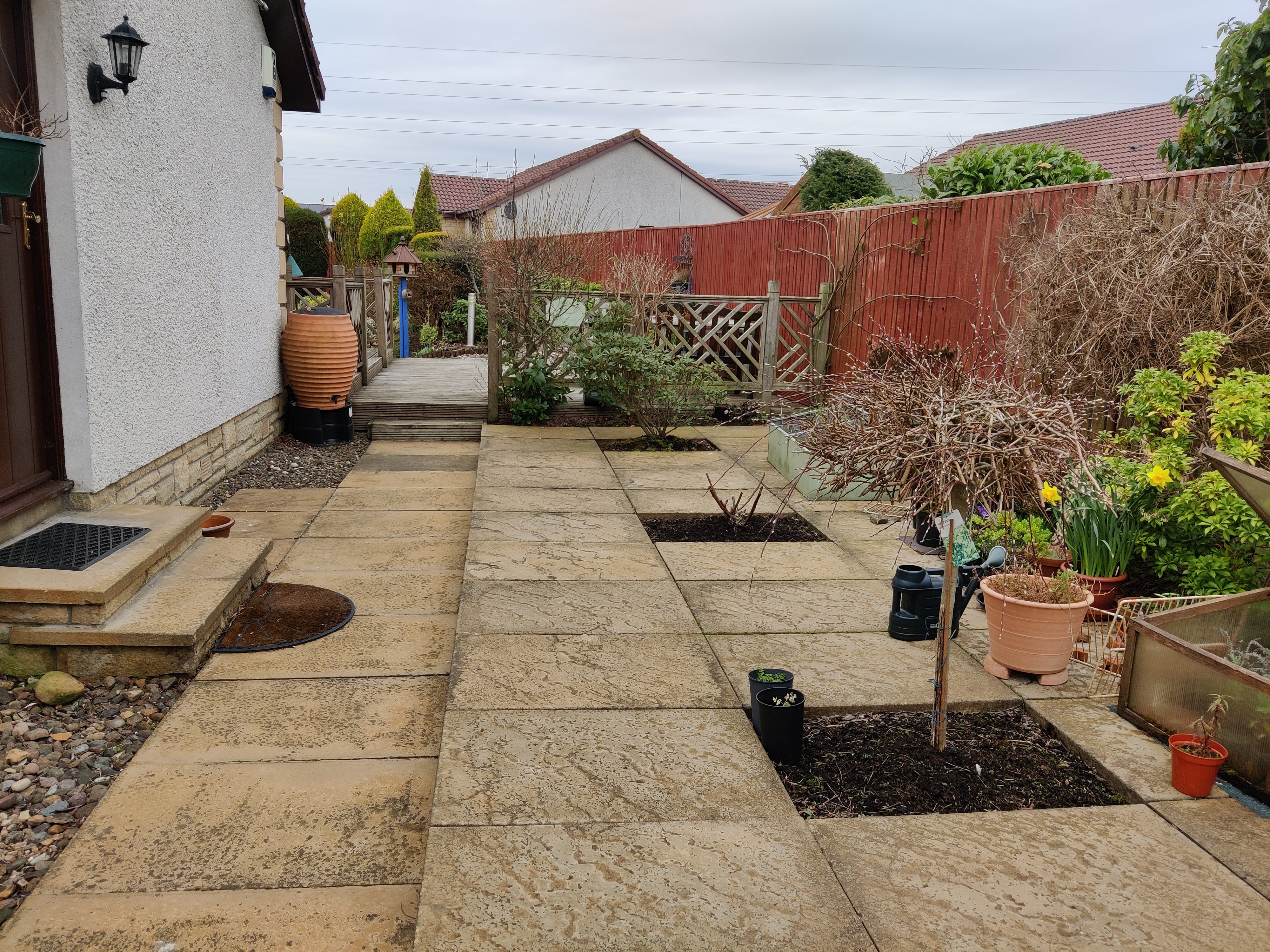
<p>Investing in your garden with the expertise of a garden designer can transform not only your garden, but also the way you live.</p>]]></content><author><name>Anna</name></author><category term="chat" /><category term="chat" /><summary type="html"><![CDATA[The New Year is a time to embrace change.]]></summary><media:thumbnail xmlns:media="http://search.yahoo.com/mrss/" url="https://www.blackwoodgardens.co.uk/blog10_cover.jpg" /><media:content medium="image" url="https://www.blackwoodgardens.co.uk/blog10_cover.jpg" xmlns:media="http://search.yahoo.com/mrss/" /></entry><entry><title type="html">New Build Garden - Alyth</title><link href="https://www.blackwoodgardens.co.uk/Alyth" rel="alternate" type="text/html" title="New Build Garden - Alyth" /><published>2025-12-23T00:00:00+00:00</published><updated>2025-12-23T00:00:00+00:00</updated><id>https://www.blackwoodgardens.co.uk/Alyth</id><content type="html" xml:base="https://www.blackwoodgardens.co.uk/Alyth"><![CDATA[<p>This garden was quite literally a blank canvas with a sea of rocks and mud.</p>

<p>The homeowners had just moved into their beautiful new home and were eager to create an outdoor space that matched it.</p>

<p>Coming from a mature garden, they were keen to have their new garden designed that balanced beauty with practicality, including space for growing their own fruit and vegetables.</p>

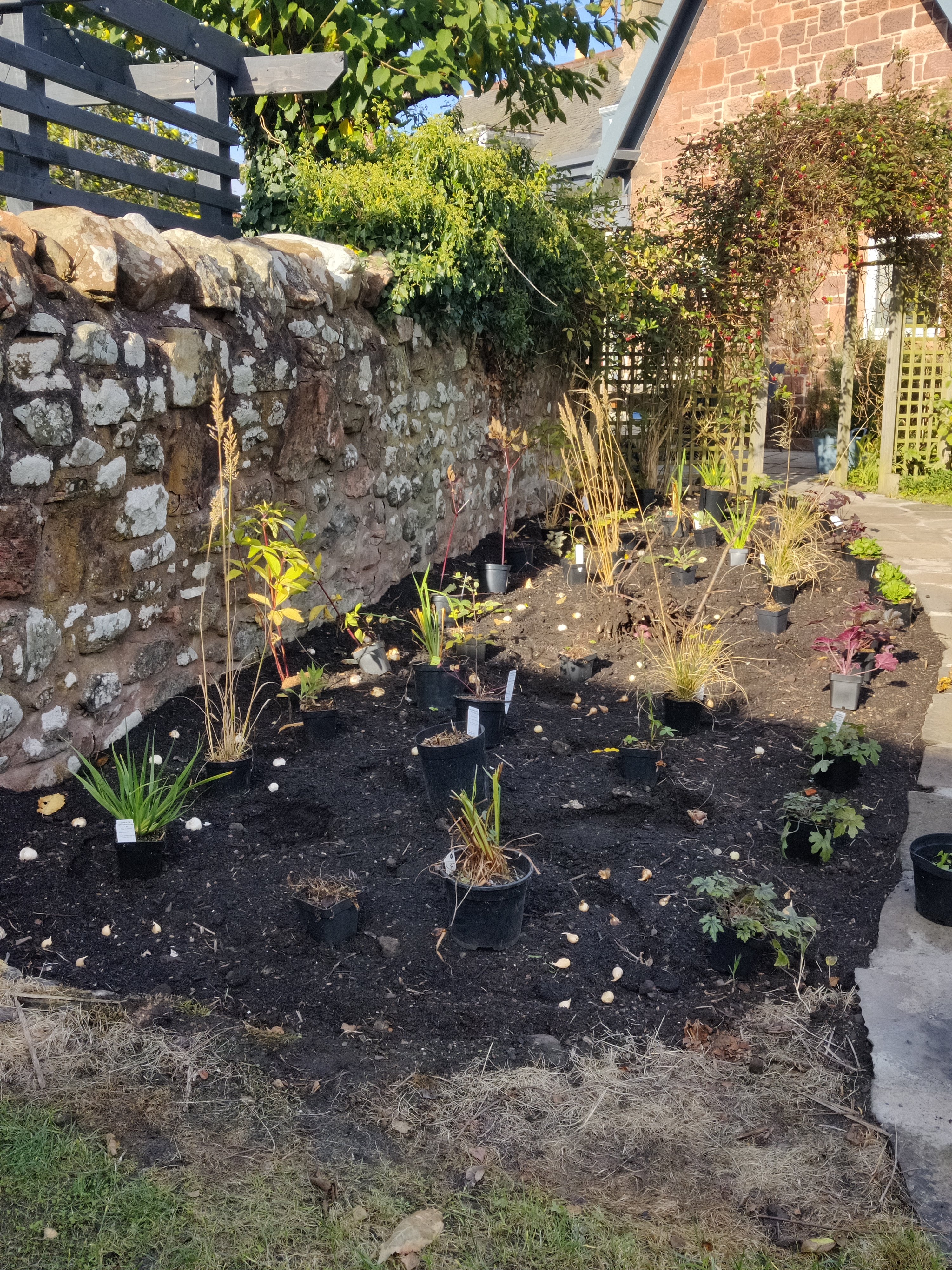
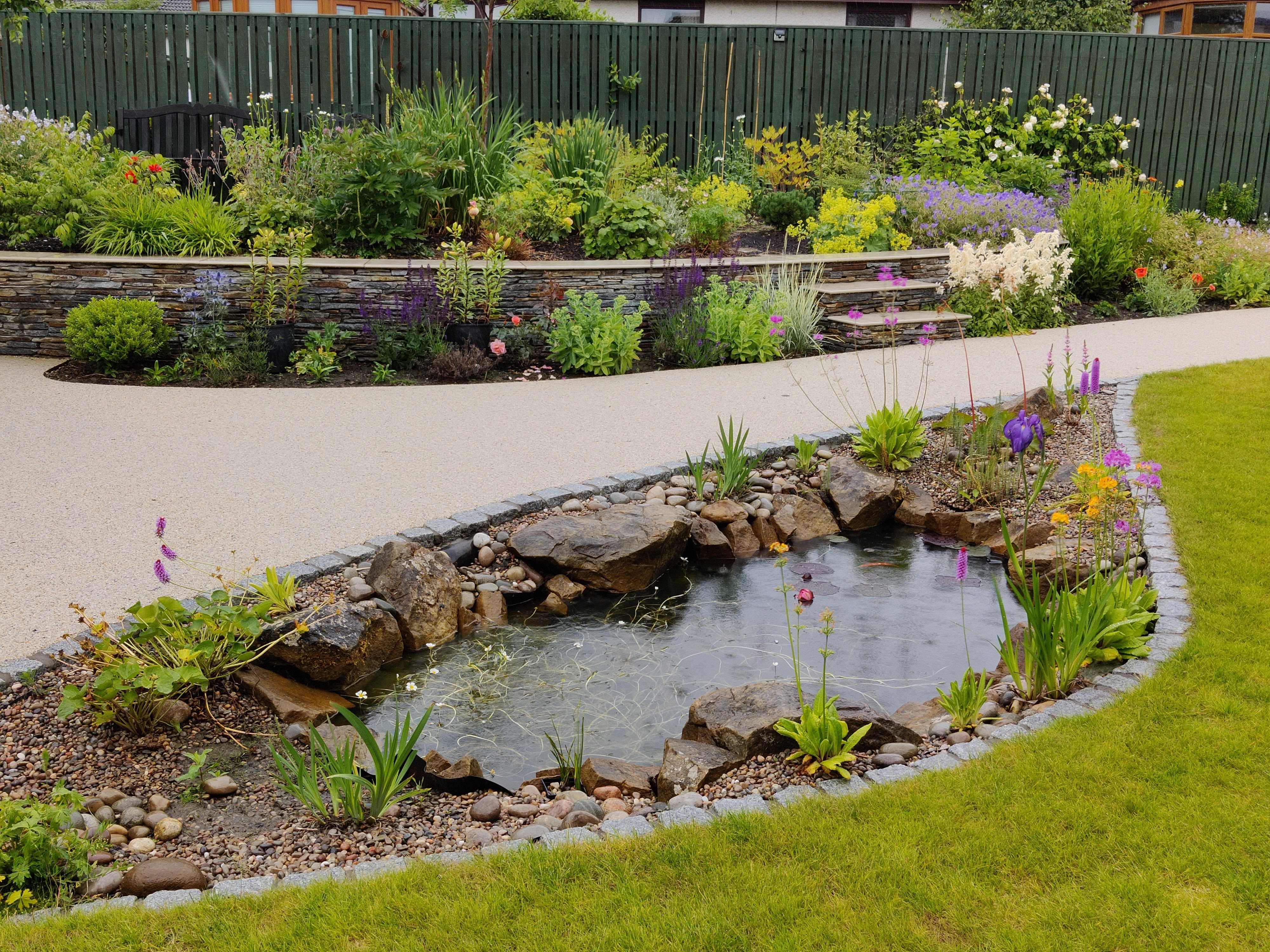
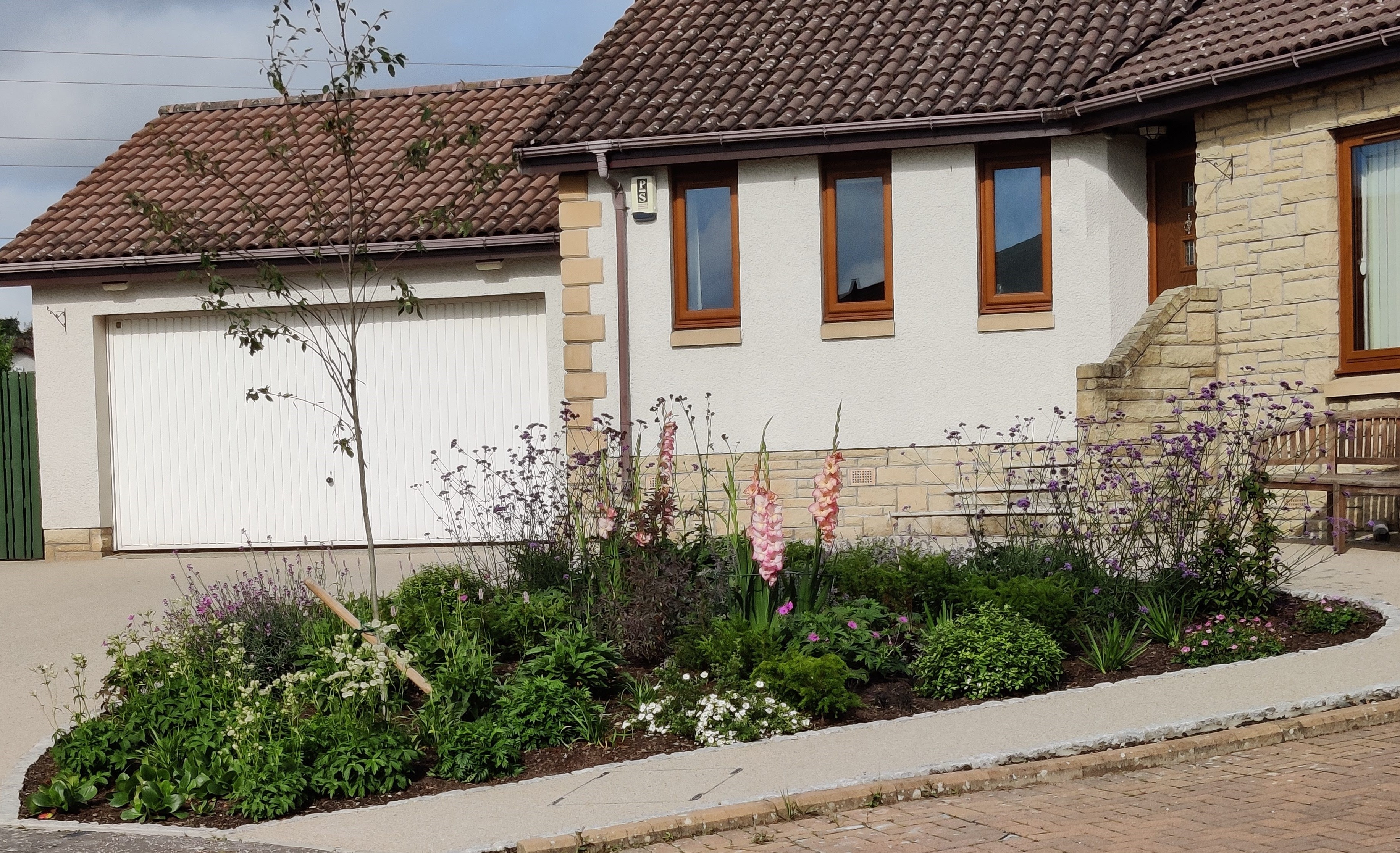
<p>My design focused on sweeping, organically shaped planting beds that created beautiful views from the house.</p>

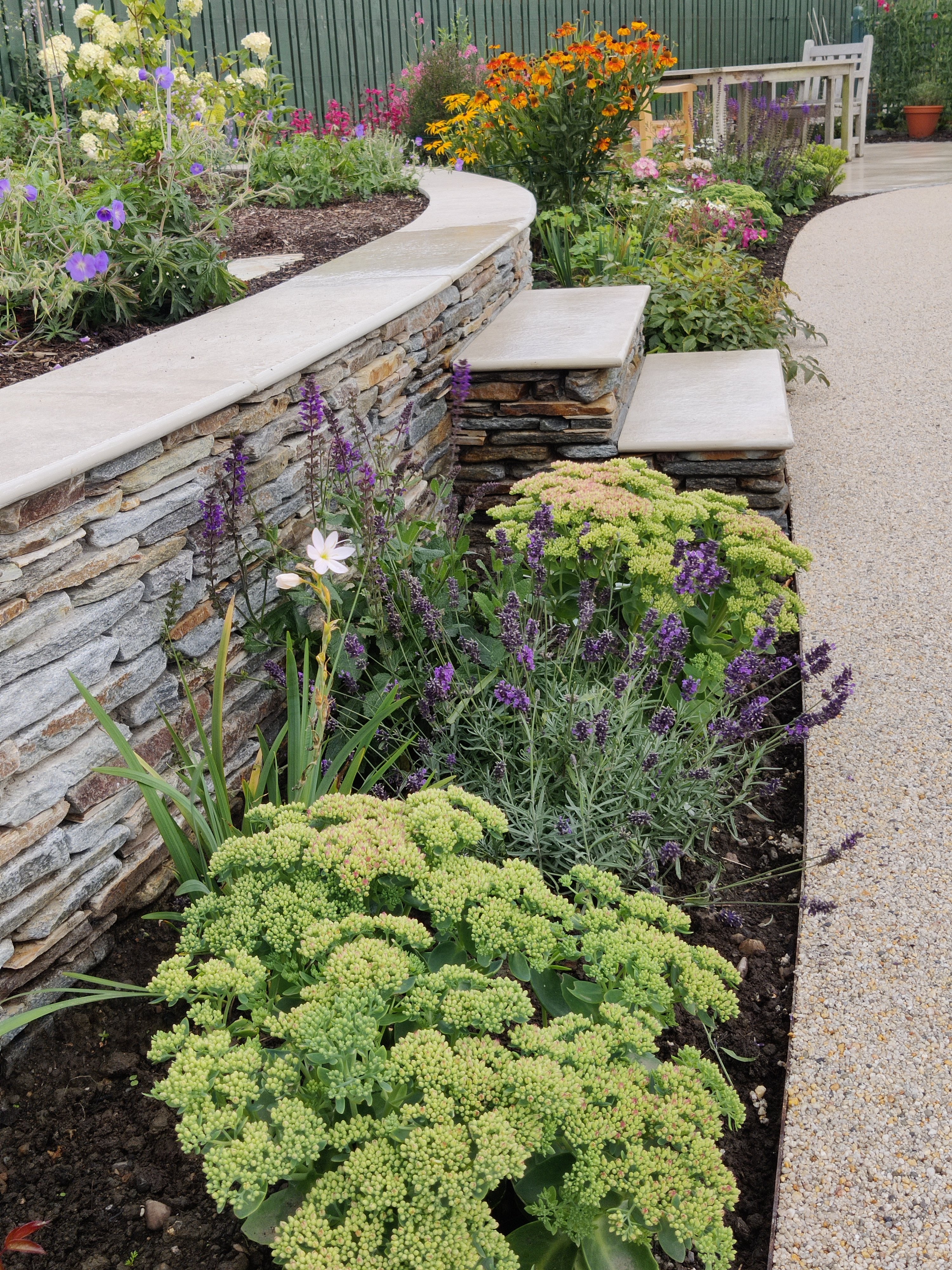
<p><img src="/assets/img/Alyth_thalictrum.jpg" alt="Planting" /><em>Planting</em></p>

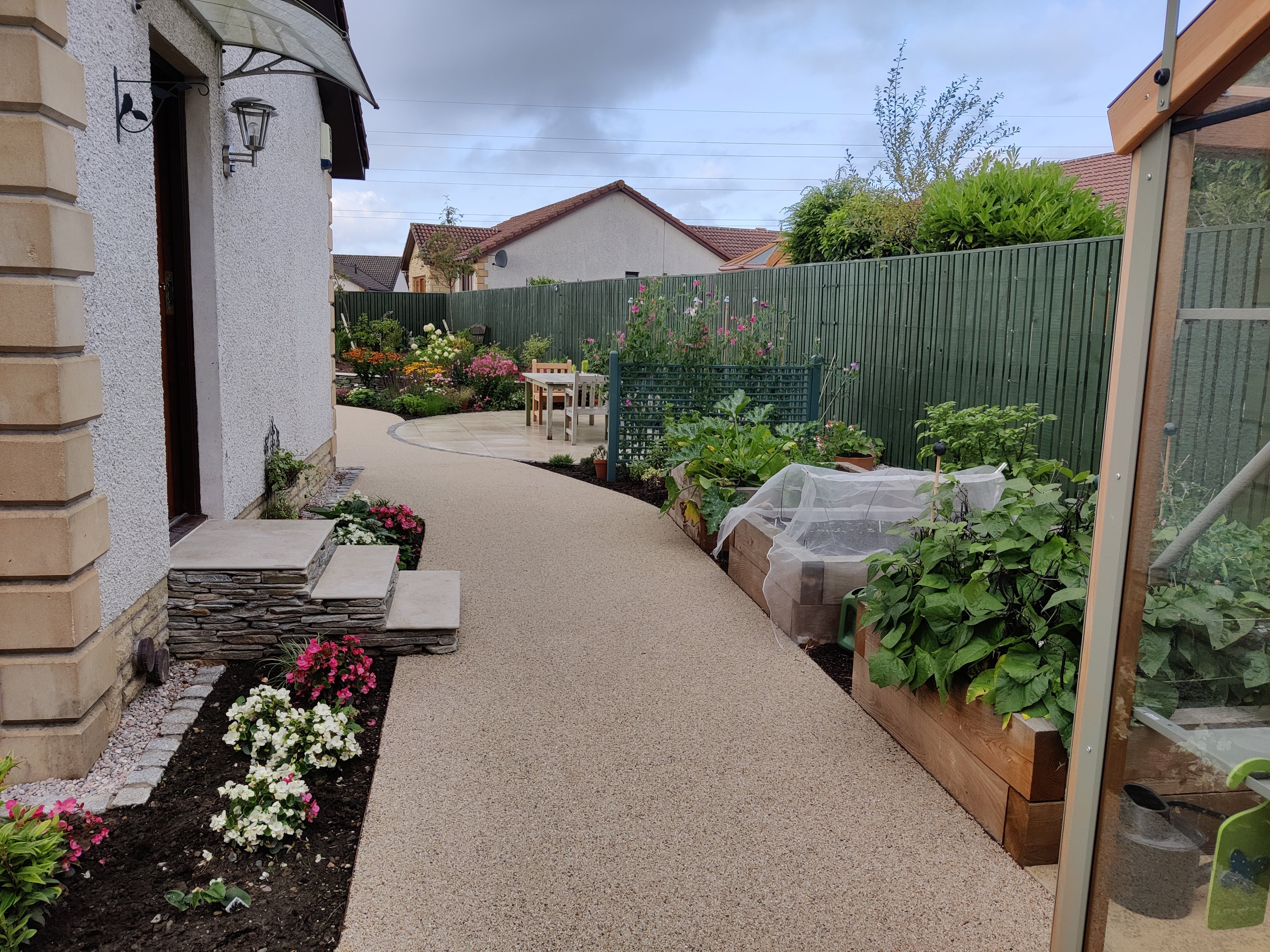
<p>Practical zoning allows for a productive fruit and vegetable area, seamless circulation, and all the functionality needed for everyday living.</p>

<p>The design included a dedicated growing space with a new greenhouse, veg trug and and fruit cordons, while the shed and washing area are conveniently positioned near the back door.</p>

<p><img src="/assets/img/Alyth_greenhouse.jpg" alt="Greenhouse" /><em>Greenhouse</em></p>

<p>Low yew hedging helps define the different zones and edges the access ramp to the house.</p>

<p><em>Amelanchier ‘Obleisk’</em> trees were introduced down the side of the house to make the most of this awkward space, adding height, greenery, and a touch of privacy.</p>

<p><img src="/assets/img/Alyth_amelanchier.jpg" alt="Amelanchier" /><em>Amelanchier</em></p>

<blockquote>
  <p>‘We used Blackwood Gardens to design our new build garden. It was a muddy stony sea of bare earth before Anna came along. She listened carefully to what we were looking for and produced a fully comprehensive design which took into account all our ‘wants’. She then ordered up all the plants and had them delivered. They all compliment each other perfectly with a beautiful colour pallette, shapes and styles. Nothing was too much trouble. We were also given superb advice re caring, tending and pruning. I cannot recommend this company highly enough. Her attention to detail was incredible. We are very happy customers.’ Evelyn Brockbank - Alyth</p>
</blockquote>

<p>The deep curved borders around the garden boundary were designed to showcase the owners’ beautiful sculptures and provides a second seating area to view the garden.
<img src="/assets/img/Alyth_sculpture.jpg" alt="Alyth Sculpture" /><em>Garden Sculpture</em></p>

<p>Climbers were trained along the fencing to soften the perimeter, while carefully selected shrubs and small trees will mature to add height to the garden, making it feel more enclosed and private.</p>

<p>Planting wraps around the patio, bringing colour, fragrance, and texture right up to the home. 
<img src="/assets/img/Alyth_patioplanting.jpg" alt="Alyth patio planting" /><em>Patio planting</em></p>

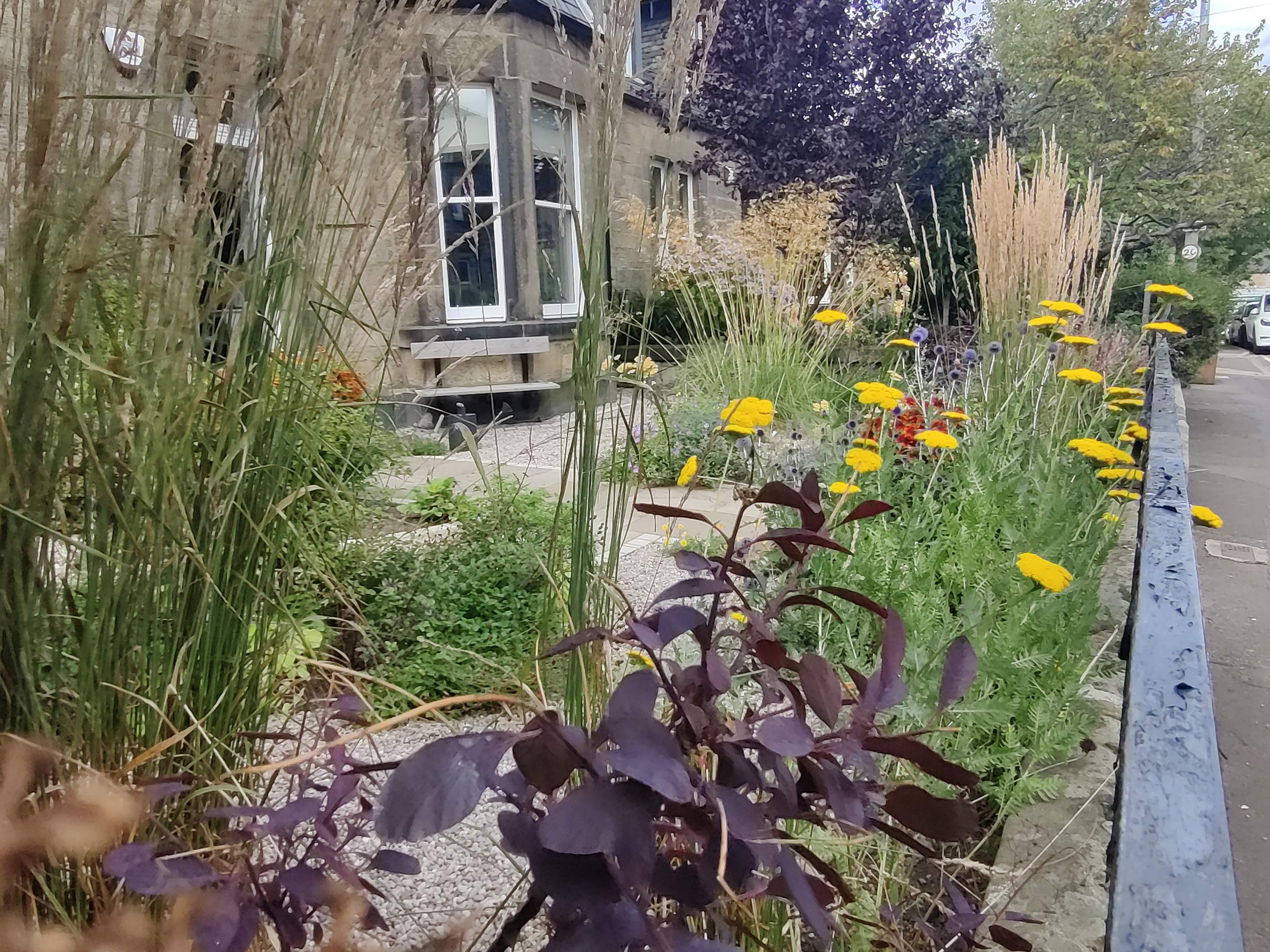
<p>The planting has a mix of bulbs, perennials, and ornamental grasses providing interest throughout the seasons.</p>

<p>A once barren plot is now transforming into a vibrant, welcoming garden giving the owners a place to relax, grow edibles and enjoy for years to come.</p>

<p><img src="/assets/img/Alyth_cirsium.jpg" alt="Cirsium" /><em>Cirsium</em></p>

<p><img src="/assets/img/Alyth_astrantia.jpg" alt="Astartia" /><em>Astrantia</em></p>

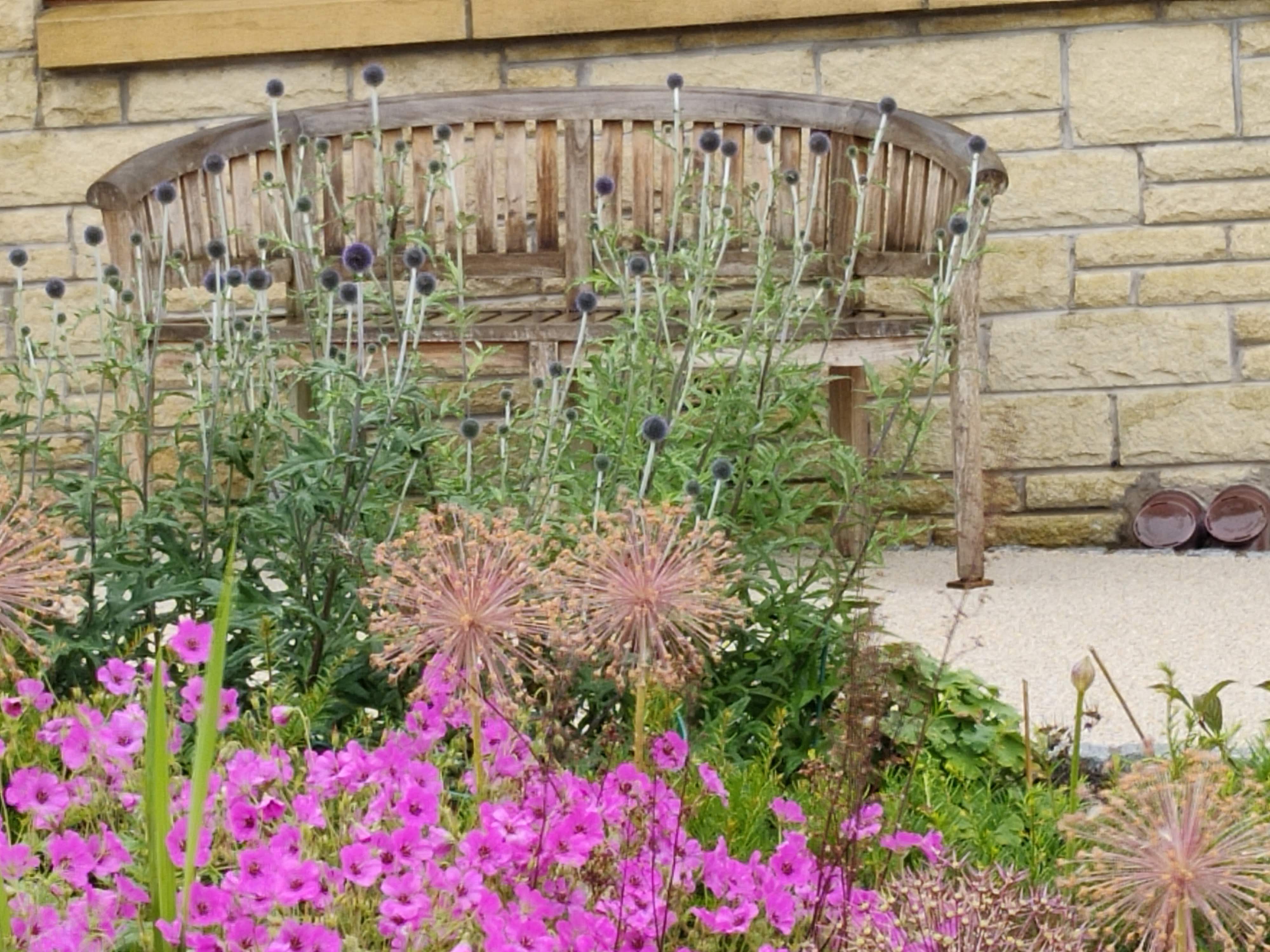
<p><img src="/assets/img/Alyth_Echinops.jpg" alt="Echinops" /><em>Echinops</em></p>

<p><img src="/assets/img/Alyth_planting3.jpg" alt="Alyth Planting" /><em>Planting</em></p>

<h3 id="site-before-starting">Site Before Starting</h3>
<p><img src="/assets/img/Alyth_before.jpg" alt="Alyth Before" /><em>Garden Before</em></p>]]></content><author><name>Anna</name></author><category term="projects" /><category term="projects" /><summary type="html"><![CDATA[This garden was quite literally a blank canvas with a sea of rocks and mud.]]></summary><media:thumbnail xmlns:media="http://search.yahoo.com/mrss/" url="https://www.blackwoodgardens.co.uk/Alyth_patio.jpg" /><media:content medium="image" url="https://www.blackwoodgardens.co.uk/Alyth_patio.jpg" xmlns:media="http://search.yahoo.com/mrss/" /></entry><entry><title type="html">The Winter Garden</title><link href="https://www.blackwoodgardens.co.uk/Winter" rel="alternate" type="text/html" title="The Winter Garden" /><published>2025-11-20T00:00:00+00:00</published><updated>2025-11-20T00:00:00+00:00</updated><id>https://www.blackwoodgardens.co.uk/Winter</id><content type="html" xml:base="https://www.blackwoodgardens.co.uk/Winter"><![CDATA[<p>In winter the need to hibernate really appeals as the days shorten and the temperture drops.</p>

<p>It might be cold, wet and windy, yet there is still so much value in having a garden that looks good at this time of year.</p>

<p>One important reason is our wellbeing.</p>

<p>Getting outside, even for a few minutes, can make a huge difference.</p>

<p>You feel calmer and more refreshed after spending time in nature and stepping away from a screen.</p>

<p>There may not be as many gardening jobs to do, but a gentle walk around your garden can lift your spirits and help you appreciate the quieter beauty of the season.</p>

<h2 id="what-makes-a-garden-interesting-in-the-winter">What makes a garden interesting in the winter?</h2>

<h3 id="dark-nights">Dark nights</h3>
<p>There are many ways to make a garden appealing in winter – espcially for those long dark nights.</p>

<p>Lighting is one of the most effective ways to bring atmosphere to your garden.</p>

<p>You might choose soft feston lights over a covered seating area or to use uplighters to highlight a beautiful tree or structural plant.</p>

<p>Good lighting extends the use of the your garden and creates a warm and inviting feel throughout the colder months.</p>

<p>Another great option for enjoying a winters night is a cozy fire pit area.</p>

<p>There is something magical about sitting outside with the warmth of a real flame, a few toasted marshmallows and a starry nights sky</p>

<p>Hot tubs and saunas can also bring a touch of luxury to the winter garden.</p>

<p>They encourage us to slow down, relax and reconnect with nature, much like our Scandinavian neighbours who embrace the season so beautifully.</p>

<h3 id="water">Water</h3>
<p>Water brings movement, reflection and a sense of life to a garden at any time of the year.</p>

<p>There are countless types of water features available, each offering a different character and style.</p>

<p>Reflective pools, formal rills and wild-life ponds all contribute something unique.</p>

<p>In winter a water feature will often take center stage.</p>

<p>It has beautiful reflective qualities and can mirror the bare branches of trees and shrubs.</p>

<p>Water draws the eye and adds interest at a time of year when the rest of the garden is quieter. 
<img src="/assets/img/blog%209%20Cowden.jpg" alt="Winter Water" />
<em>Cowden Japanese Garden</em></p>

<h2 id="look-outside">Look outside</h2>
<p>If you are anything like me, when you are not in your garden, you spend a lot of time looking at it from inside.</p>

<p>This is when winter planting really shows its value.</p>

<p>Think about your main viewpoints.</p>

<p>What do you see from the kitchen when you are washing up, or from the lounge when you are relaxing?</p>

<p>Are you able to enjoy the changing seasons as they move from autumn into winter and then towards spring?</p>

<p>Seasonal change is what makes a garden truely captivating.</p>

<p>Plants may die back in late autumn, giving a final burst of colour, while new treasures such as <em>Cyclamen</em> start to emerge.</p>

<p>These gentle transitions are easy to appreciate when your garden is designed for all the seasons.</p>

<h2 id="brown-doesnt-mean-boring">Brown doesn’t mean boring</h2>
<p>In the old days of gardening, if you grew a lot of perennials, you were told to cut everything back and leave it all neat and tidy, until spring came along.</p>

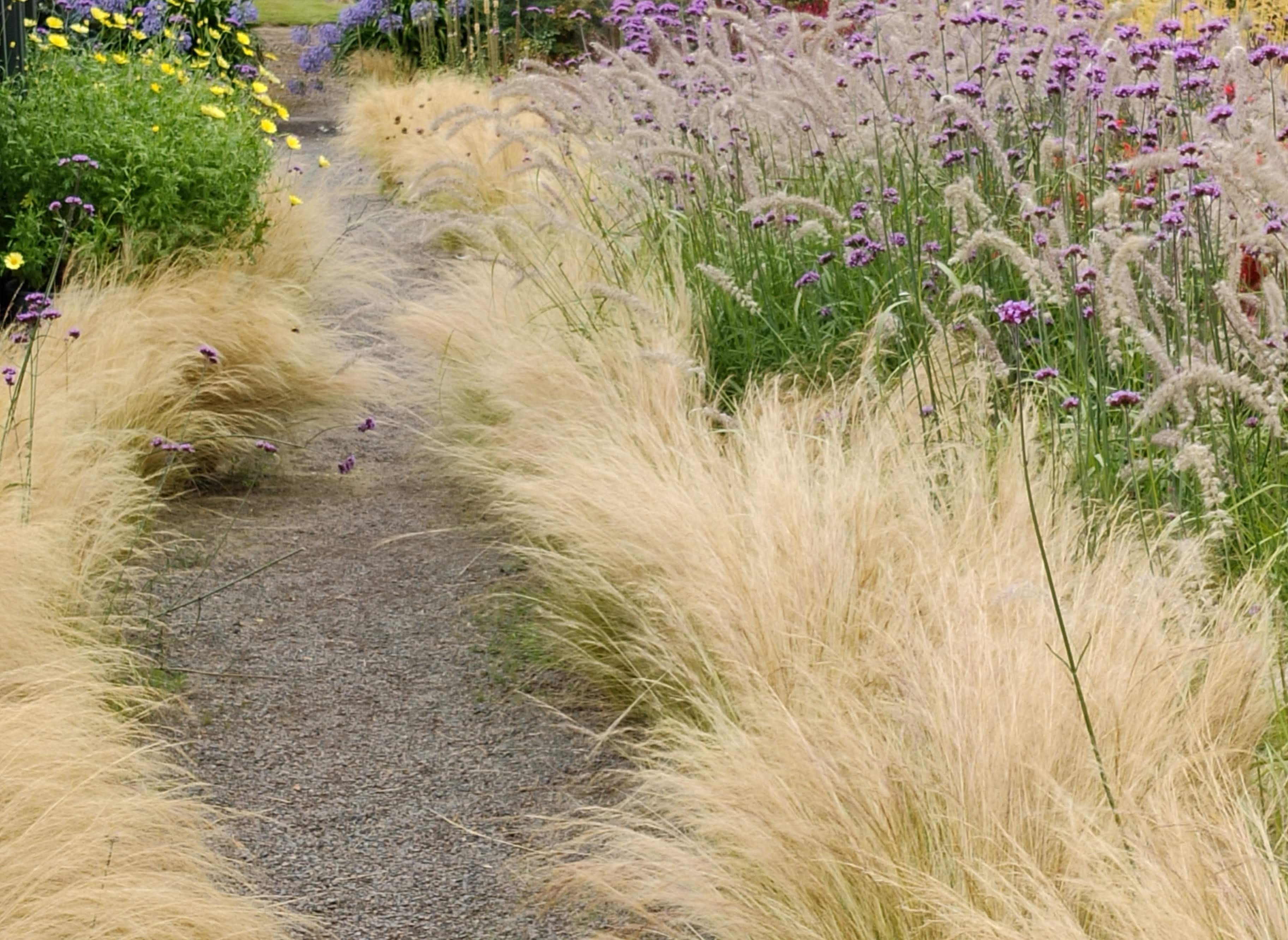
<p>We don’t tend to do that now, less tidy, less work and more seasonal interest with beautiful seed heads which look stunning in the haw frost. 
<img src="/assets/img/Blog%209%20hedge.jpg" alt="Hedge" />
<em>Beech Hedge with Miscanthus</em></p>

<p>Ornamental grasses and especially valuable in  winter.</p>

<p>Many retain upright through storms and bring movement and texture to the space. They catch the low winter light and add warm, golden tones.</p>

<h2 id="winter-interest-plants">Winter interest plants</h2>
<p>Winter interest comes from textural grasses, brightly coloured stems, stunning barks and evergreen structure.</p>

<p>Decidious multi-stemmed trees can also look particularly striking.</p>

<p>When planning a winter garden, it helps to think beyond the evergreen shrubs and lawns.</p>

<p>They are important but texture, shape and form are what makes a garden come alive. 
<img src="/assets/img/blog%209%20nasella%20and%20cornus.jpg" alt="Grass and stems" />
<em>Nasella tenuissima with Cornus siberica</em></p>

<h2 id="favourite-plants-for-winter">Favourite Plants for Winter</h2>

<h3 id="grasses">Grasses</h3>
<ul>
  <li><em>Calamagrostis ‘Karl Forester’</em> – tall, upright grass and reliable through winter</li>
  <li><em>Nasella tenuissima</em> – soft , floaty and beautifully golden in winter</li>
  <li><em>Sesilaria autumnalis</em> – evergreen grass with lime green tones in autumn</li>
  <li><em>Miscanthus</em> – many different cultivars with beautiful flowerheads that last into winter
<img src="/assets/img/blog%209%20miscanthus.jpg" alt="Miscanthus" />
<em>Miscanthus</em></li>
</ul>

<h3 id="shrubs">Shrubs</h3>
<ul>
  <li><em>Mahonia’Soft Caress’</em>– lovely soft foilage ( not spiked) and flowers in winter</li>
  <li><em>Daphne ‘Jacqueline Postil’</em> – Evergreen pale green foilage and the most beautiful scented flowers late winter</li>
  <li><em>Camelias</em> and <em>Rhododendrons</em> - have great foilage for winter and many species Rhododendrons have amazing bark</li>
  <li><em>Osmanthus delvayi</em> – evergreen with white scented flowers late winter</li>
  <li><em>Cornus ‘Midwinter fire’</em> - glowing stems that look beautiful paired with ornamental grasses</li>
  <li><em>Hydrangeas</em> – dried flowerheads add structure and look great with a light covering of snow.
<img src="/assets/img/blog%209%20hydrangea.jpg" alt="Hydrangea in Snow" />
<em>Hydrangea</em></li>
</ul>

<h3 id="winter-flowers">Winter flowers</h3>
<ul>
  <li><em>Cyclamin coum</em> – marbelled foilage and dainty pink and white flowers</li>
  <li><em>Hellebores</em> (Christmas Rose)– Evergreen and a very useful woodland plant. From the fresh green of <em>Helleborus Foetidus</em> to some beautiful orientalis hybrids. H. ‘Emma’ is favourite for dusty pink flowers flowers</li>
  <li><em>Galanthus nivalus</em> – Simple and timeless, looks best on mass to carpet a woodland floor</li>
</ul>

<h3 id="winter-seedheads">Winter seedheads</h3>
<p>These plants keep giving after flowering. Their seedheads add structure and provide food for birds and other wildlife.</p>

<ul>
  <li><em>Lunaria annua</em> (Honesty) - beautiful white seedheads that look like silver pennies in the winter</li>
  <li><em>Phlomis russeliana</em> – tiered flowerheads that look wonderful with oranmental grasses</li>
  <li><em>Cynara cardunculus</em> ( Cardoon or globe  artichoke) - dramtatic architectural thistle heads</li>
  <li><em>Echinacea</em>  (Cone flower) or <em>Rudbeckia</em> (black eyed susan) - simple daisy shaped flowers
<img src="/assets/img/blog%209%20phlomis.jpg" alt="Phlomis" />
<em>Phlomis russeliana</em></li>
</ul>

<p>This is just a small sample, there are many more perennials that will have beautiful seedheads and provide a valuable habitat for wildlife.</p>

<h2 id="make-the-most-of-your-winter-garden">Make the most of your winter garden</h2>
<p>I hope I have inspired you to enagage with your garden over the winter and provided a few tips and ideas to make the most of your garden in the winter season.</p>

<p>For more help and ideas on how to make the most of your garden why not try a <a href="Consultation">consultation with Anna at Blackwood Gardens</a></p>]]></content><author><name>Anna</name></author><category term="chat" /><category term="chat" /><summary type="html"><![CDATA[In winter the need to hibernate really appeals as the days shorten and the temperture drops.]]></summary><media:thumbnail xmlns:media="http://search.yahoo.com/mrss/" url="https://www.blackwoodgardens.co.uk/Blog9WinterGarden.jpg" /><media:content medium="image" url="https://www.blackwoodgardens.co.uk/Blog9WinterGarden.jpg" xmlns:media="http://search.yahoo.com/mrss/" /></entry><entry><title type="html">Six Reasons to Plant a Hedge</title><link href="https://www.blackwoodgardens.co.uk/Hedges" rel="alternate" type="text/html" title="Six Reasons to Plant a Hedge" /><published>2025-10-29T00:00:00+00:00</published><updated>2025-10-29T00:00:00+00:00</updated><id>https://www.blackwoodgardens.co.uk/Hedges</id><content type="html" xml:base="https://www.blackwoodgardens.co.uk/Hedges"><![CDATA[<p>Hedging might not sound like the most exciting feature in the garden, but it’s one of the most useful and versatile.</p>

<p>From wildlife-friendly native hedgerows to neat, sculpted topiary, hedges can transform how your garden looks and feels.</p>

<p>They bring structure, privacy, and life to outdoor spaces.</p>

<p>Here are six good reasons to plant a hedge in your garden.</p>

<h2 id="1-screening-and-privacy">1. Screening and Privacy</h2>
<p>Hedges are ideal for creating a sense of privacy between you and your neighbours or for screening your garden from the road.</p>

<p>Pleached trees are another great option for a stylish green screen.</p>

<p>Think of them as a hedge on stilts – they offer height and elegance without needing planning permission.</p>

<p>A living screen feels softer and more natural than a fence and will look good all year round.</p>

<h2 id="2-cleaner-air-and-less-pollution">2. Cleaner Air and Less Pollution</h2>
<p>Traffic pollution is a growing issue, especially in towns and cities.</p>

<p>Research from the <a href="https://www.surrey.ac.uk/news/plant-hedges-combat-near-road-pollution-exposure">University of Surrey</a> (external link) shows that hedges can reduce exposure to airborne pollutants and carbon by up to 63 per cent.</p>

<p>Planting a hedge along a boundary can help filter fine particles from the air, improve air quality, and make your garden a healthier space to enjoy.</p>

<h2 id="3-a-haven-for-wildlife">3. A Haven for Wildlife</h2>
<p>A mixed hedge is one of the best ways to support wildlife. Birds nest safely among the branches, insects find shelter, and hedgehogs use hedges as green corridors to move between gardens.</p>

<p>In urban and suburban areas, these living boundaries are essential for maintaining biodiversity and connecting fragmented habitats.</p>

<h2 id="4-wind-protection">4. Wind Protection</h2>
<p>Hedges naturally slow down strong winds and create a more sheltered garden.</p>

<p>This is especially useful in exposed coastal or rural areas of Scotland, where wind can cause damage.</p>

<p>Unlike a fence, a hedge filters the wind rather than blocking it, making it more resilient to stormy weather.</p>

<h2 id="5-garden-zoning-and-design">5. Garden Zoning and Design</h2>
<p>Hedges are a brilliant tool in garden design.</p>

<p>They define spaces, introduce structure, and make the garden more interesting to explore.</p>

<p>Use them to hide compost bins, frame seating areas, or divide your garden into zones so that each space reveals itself gradually.</p>

<p>Low, evergreen hedges can also add a sense of formality and help guide the eye through the garden.
<img src="/assets/img/blog%207_image%202.jpg" alt="Oban Garden Zone" /></p>

<h2 id="6-natural-security">6. Natural Security</h2>
<p>For a more secure boundary, a spiky hedge is an effective deterrent.</p>

<p><em>Prunus spinosa</em> (Blackthorn), <em>Pyracantha</em>, or even wild roses form dense, thorny barriers that are both beautiful and functional.</p>

<p>A living hedge provides privacy, protection, and seasonal interest all at once.</p>

<p><img src="/assets/img/blog7_image3.jpg" alt="Pyracantha" />
<em>Pyracantha</em></p>

<h1 id="choosing-the-right-hedge-for-a-scottish-garden">Choosing the Right Hedge for a Scottish Garden</h1>
<p>There’s a hedge for every setting and style – evergreen, deciduous, flowering, tall, or compact.</p>

<p>Here are a few reliable options for Scottish gardens.</p>

<h2 id="evergreen-hedges">Evergreen Hedges</h2>
<p><em>Taxus baccata</em> (Yew) – a timeless hedge that’s slow-growing, hardy, and elegant.</p>

<p><em>Ligustrum ovalifolium</em> (Privet) is a classic choice that’s easy to maintain and recovers well from pruning.</p>

<p>Other evergreens include <em>Photinia</em> (with glossy red leaves) and <em>Laurus nobilis</em> (Laurel) for a big hedge with glossy leaves</p>

<p>For smaller gardens, try <em>Euonymus</em> ‘Green Spire’ as a neat, disease-resistant alternative to box.</p>

<p><em>Rosmarinus</em> (Rosemary) and <em>Lavandula</em> (Lavender) can also create lovely scented hedges in sunny, well-drained spots.</p>

<h2 id="deciduous-hedges">Deciduous Hedges</h2>
<p><em>Fagus sylvatica</em> (Beech) is a favourite across the UK because it keeps its coppery leaves for most of the winter before new growth appears in spring.</p>

<p><em>Carpinus betulus</em> (Hornbeam) is similar but slightly tougher, making it ideal for colder or wetter parts of Scotland.
<img src="/assets/img/blog7_hornbeam.jpg" alt="hornbeam" /></p>

<h2 id="flowering-hedges">Flowering Hedges</h2>
<p>If you prefer colour, <em>Escallonia</em>, <em>Ceanothus</em> and <em>Pyracantha</em> are excellent evergreen options that flower beautifully.</p>

<p><em>Pyracantha</em> has white blossom in summer and bright berries in autumn that birds love.</p>

<p><img src="/assets/img/blog7_image4.jpg" alt="Ceonothus" />
<em>Ceanothus</em></p>

<p><em>Fuchsia magellanica</em> produces striking red and purple flowers through summer and thrives in milder coastal regions.</p>

<h2 id="wildlife-friendly-hedges">Wildlife-Friendly Hedges</h2>
<p><em>Crataegus monogyna</em> (Hawthorn) is a traditional British hedgerow plant with pretty white blossom in May and red berries in autumn.</p>

<p>To create a wildlife-friendly mix, combine hawthorn, rosehip, blackthorn, and holly.</p>

<p>The variety will provide nectar, berries, and shelter throughout the year – and look lovely in every season.</p>

<h2 id="structure-and-seasonal-interest">Structure and Seasonal Interest</h2>

<p>Good garden design isn’t only about statement features; it’s about structure.</p>

<p>A well-placed hedge gives the garden backbone, shaping the space and providing interest even in winter.</p>

<p>In a Scottish garden, where seasons can be unpredictable, structure is what keeps the design working all year round.</p>

<p><img src="/assets/img/blog7_%20image%201.jpg" alt="Seasonal Interest" /></p>

<h2 id="planting-a-hedge">Planting a Hedge</h2>

<p>Autumn and winter are the best times to plant a hedge using bare-root stock.</p>

<p>It’s affordable, environmentally friendly, and ideal for establishing strong roots before spring.</p>

<p>If you prefer instant results, mature hedging is available from specialist nurseries, though it comes at a higher cost.</p>

<p>When planting, ensure good soil preparation and consistent spacing for even growth. Water well through the first season and mulch to retain moisture.</p>

<h1 id="final-thoughts">Final Thoughts</h1>

<p>Whether you’re looking to add privacy, attract wildlife, or give your garden a stronger design framework, hedges are a timeless solution.</p>

<p>They bring structure, beauty, and biodiversity – all while supporting a more sustainable landscape.</p>

<p>So if you’re planning improvements to your Scottish garden this year, it might just be time to plant a hedge.</p>]]></content><author><name>Anna</name></author><category term="chat" /><category term="chat" /><summary type="html"><![CDATA[Hedging might not sound like the most exciting feature in the garden, but it’s one of the most useful and versatile.]]></summary><media:thumbnail xmlns:media="http://search.yahoo.com/mrss/" url="https://www.blackwoodgardens.co.uk/blog7_image5.jpg" /><media:content medium="image" url="https://www.blackwoodgardens.co.uk/blog7_image5.jpg" xmlns:media="http://search.yahoo.com/mrss/" /></entry><entry><title type="html">Who does what in a Garden Renovation ?</title><link href="https://www.blackwoodgardens.co.uk/WhoDoesRenovation" rel="alternate" type="text/html" title="Who does what in a Garden Renovation ?" /><published>2025-09-17T00:00:00+00:00</published><updated>2025-09-17T00:00:00+00:00</updated><id>https://www.blackwoodgardens.co.uk/WhoDoesRenovation</id><content type="html" xml:base="https://www.blackwoodgardens.co.uk/WhoDoesRenovation"><![CDATA[<p>Do you know who to contact to renovate your garden?</p>

<p>Do you know what services the various trades offer?</p>

<p>There are lots of professionals that work on and in a private garden; from designing it, to building it, and on to maintaining it.</p>

<p>Getting the right team can avoid costly mistakes, so you get the garden of your dreams.</p>

<h3 id="lets-start-with-a-garden-designer">Let’s start with a Garden Designer</h3>

<p>A Garden Designer is a <a href="https://sgld.org.uk/find-a-designer/working-with-a-designer">professional qualified in garden design.</a> (external link)</p>

<p>They will work with a client to fully understand their requirements to be able to design the garden to meet these requirements.</p>

<p>They will be able to produce scaled drawings of the garden from presentation plans to detailed drawings that will provide enough information for the landscaper to be able to build the garden.</p>

<p>They will select the materials and produce specifications for the build.</p>

<p>They will often work closely with the landscaper, monitoring the build stage to make sure the garden is built as designed.</p>

<p>Garden designers are knowledgeable on many aspects of the garden from lighting to drainage and will have horticulture skills to be able to select the right plants for your garden.</p>

<p>Their role is different to that of a Landscape Architect, who will often work on much larger projects such as urban landscapes, whereas Garden designers tend to work in private gardens and have detailed plant knowledge.</p>

<p>Planting design is a service many garden designers provide.</p>

<p>This is selecting plants combinations that will thrive in your garden and create the desired garden ambience.</p>

<p>Some designers just focus on planting design.</p>

<p>When selecting a Garden Designer it is important to understand; the service they offer, their qualifications and experience and 
any particular style or philosophy they have.  This will help you find the right designer for your own garden.</p>

<h3 id="landscapers-will-build-your-garden">Landscapers will build your garden</h3>

<p>Landscapers are highly skilled trades people and will work with the different ground conditions and levels, build walls, lay patios, landscape the ground, install drainage, prepare the ground for planting and much much more.</p>

<p>They ususally don’t get involved in plant selection.</p>

<p>Before hiring a landscaper it is really important to know what you want built and the materials you want to use.</p>

<p><img src="/assets/img/blog%205,%20image%201%20garden%20under%20construction.jpg" alt="" />
<em>Garden under Construction</em></p>

<h3 id="horticulturist-or-gardener">Horticulturist or gardener?</h3>

<p>We have all heard of the term gardener, but there are many different levels of skills from amaturer  gardeners to highly trained and skilled horticulturists.</p>

<p>Horticulturists know their plants and how to look after them.</p>

<p>They understand the difference between a weed and a plant in the right place.</p>

<p>They can ID plants, know how and when to prune plants and much more.</p>

<p>Horticulturists are very different to gardeners who will only cut you grass or hedges and can’t tell the difference between say <em>Astrantia</em> and <em>Ajuga</em>.</p>

<p>Before hiring a gardener to look after your space, think about the tasks you want done, how often you need help and what you are willing to pay for ongoing maintenance.</p>

<p>It is a good idea to find out what other gardens they look after so you can get an ideas if its the right maintenance team for your needs.</p>

<p><img src="/assets/img/blog%205%20-%20image%202%20astrantia%20'Roma'.jpg" alt="" />
<em>Astrania Roma</em></p>

<p>There are many other professionals that work in private gardens from lawn care professionals to Arborists; who specialise in looking after trees and maintaining good tree health.</p>

<h3 id="choosing-who-to-work-with">Choosing who to work with</h3>

<p>Selecting who to work with is important.</p>

<p>Personal recommendations are a good place to start.</p>

<p>Also check out trade bodies, they will often list accredited members who adhere to professional standards.</p>

<p>It is always a good idea to see examples of work and ascertain skill levels and the service provided.</p>

<p>Communication will also be key to a successful working relationship, are they easy to get hold of, answer your questions and keep you informed of progress ?</p>

<p>If you are looking at a full garden transformation, then contact a Garden Designerin the first instance.</p>

<p>They will not only design your garden for you, but they will often bring in skilled and knowledgeable trades people at the different stages of the garden development.</p>

<p><img src="/assets/img/blog%205,%20image%203%20Anna%20setting%20out%20plants.JPG" alt="Anna and Plants" /></p>

<p>So if you are ready to start your garden transformation let’s start a conversation.</p>

<p>Anna Blackwood is the founder of Blackwood Gardens, a garden design studio based in East Lothian, operating across Edinburgh and the Lothians.</p>

<p>She is a keen plantswoman and enjoys transforming people’s gardens.</p>

<p>Anna is an associate member of the Society of Garden and Landscape Designers currently completing the final stages of accreditation.</p>]]></content><author><name>Anna</name></author><category term="chat" /><category term="chat" /><summary type="html"><![CDATA[Do you know who to contact to renovate your garden?]]></summary><media:thumbnail xmlns:media="http://search.yahoo.com/mrss/" url="https://www.blackwoodgardens.co.uk/blog5_cover.jpg" /><media:content medium="image" url="https://www.blackwoodgardens.co.uk/blog5_cover.jpg" xmlns:media="http://search.yahoo.com/mrss/" /></entry><entry><title type="html">The Fragrant Garden</title><link href="https://www.blackwoodgardens.co.uk/Fragrant" rel="alternate" type="text/html" title="The Fragrant Garden" /><published>2025-07-30T00:00:00+00:00</published><updated>2025-07-30T00:00:00+00:00</updated><id>https://www.blackwoodgardens.co.uk/Fragrant</id><content type="html" xml:base="https://www.blackwoodgardens.co.uk/Fragrant"><![CDATA[<p>Scent is so important in the garden.</p>

<p>Scent helps us connect with the garden on both an emotional and physical level.</p>

<p>Plants often evoke memories, and scent is a significant trigger for these memories.</p>

<p>For example, I remember my grandad growing sweetpeas (<em>lathyrus odoratus</em>) up an arch, so when I got my first garden, the first thing I did was grow sweetpeas up my arbour, bringing in a lovely sensory experience and the benefit of lots of cut flowers for the house too.</p>

<h2 id="fragrance-is-personal">Fragrance is personal</h2>

<p>What we like differs from person to person.</p>

<p>For example, one of my favourite scented plants is <em>Salvia ‘Nachtvilinder’</em>, but a colleague I worked with hated it.</p>

<p>I don’t like the smell of honey, so <em>Saracocca confusa</em> is not my favourite winter-scented shrub!</p>

<p>Give me a Daphne any time.</p>

<p><img src="/assets/img/Blog8_Daphne_'Jacqueline_Postill'.jpg" alt="Daphne Jacqueline Postill" />
<em>Daphne ‘Jacqueline Postill’</em></p>

<h2 id="wake-up-and-smell-the-roses">Wake up and smell the roses</h2>

<p>We all know this common saying that encourages us to appreciate the beauty and simple pleasures in life.</p>

<p>Roses are one of the most infamous plants for scents, but not all modern roses are scented, so do your research when choosing a rose.</p>

<p>Visit a garden centre when they are in flower, so you can smell them and see the blooms. Don’t forget to check out the label too, so you know what type of rose you are buying and what their eventual size will become.</p>

<p>For example, ramblers can be huge; they are designed to grow up a tree, so take care when choosing to get the right rose for the right place.</p>

<p>You can always postpone the purchase until winter and buy a bare-root rose.</p>

<p>Winter is a good time to plant roses, and bare-root plants are often cheaper than a potted rose.</p>

<p>This <a href="https://www.davidaustinroses.co.uk/pages/fragrance-notes">Specialist Rose Grower (external link)</a> contains great information describing the different scents.</p>

<p>Roses have three scent categories:</p>

<ul>
  <li>Old Rose</li>
  <li>Tea</li>
  <li>Musk</li>
</ul>

<p>Enjoy researching your favourite scent.</p>

<p>The saying <strong>“Wake up and smell the roses”</strong> is a reminder to take notice of the world around us, so when you are pottering in your garden, you may notice the scent is not all about flowers.</p>

<p>You get some fabulous fragrant foliage, like the hard-working <em>geranium macrorrhizum</em> which makes a good ground cover plant, or the summer-flowering <em>agastache blackadder</em> with its tall blue spikes.</p>

<p>The leaves have a lovely fragrance with a purple underside.</p>

<p>Salvias have to be one of my favourites for scent, just brushing the foliage when weeding makes the task a joy as you get beautiful wafts of scent to reward your hard work.</p>

<h2 id="scent-for-all-seasons">Scent for all seasons</h2>

<p>A well-designed planting scheme will have seasonal interest in shape, form and colour and should plan for scent for all the seasons.</p>

<h3 id="winter">Winter</h3>
<p><em>Saracocca confusa</em> – often called Christmas box, <em>Daphne odorata</em> or <em>Osmanthus delvayi</em> are really good shrubs for scent, even <em>Galanthus nivalus</em> (snow drops) have a gentle scent you can enjoy, if you can get down close to enjoy it.</p>

<h3 id="spring">Spring</h3>
<p>Narcissus(daffodils) many have lovely scent e.g. ‘Artic bells’.</p>

<p>Hyacinth or <em>Convallaria majalis</em>(Lily of the valley) are good choices and <em>Phlox ‘Clouds of Perfume’</em> – well the name says it all.</p>

<p>Late spring and early summer the garden really starts to take off and there are lots of scented plants to choose from and this is when Paeonies really come into their own.</p>

<p>Paeonies are like Roses, you need to choose the cultivar carefully, as not all Paeonies have a gorgeous scent.</p>

<p>A few favourites for scent are: <em>Paeonia lactiflora ‘Duchess De Nemours’</em> or <em>Paeonia ‘Bowl of Beauty’</em> 
<img src="/assets/img/Blog8_Narcissus'Artic%20Bells'.jpg" alt="Artic Bells" />
<em>Narcissus bulbocodium ‘Artic Bells’</em></p>

<h3 id="summer">Summer</h3>
<p>The list of scented flowers in summer is just too long for this simple blog.</p>

<p>Of course you have all your old favourites like Phlox, Lavenders, Roses and Philadelphus.</p>

<p>Or you could try something different like <em>Cosmos atrosanguineus ‘Chocamocha’</em> (Chocolate Cosmos) and yes, it does smell of chocolate.</p>

<p><img src="/assets/img/Blog8_Chocolate_cosmos.jpg" alt="Chocolate Cosmos" />
<em>Chocolate Cosmos</em></p>

<h3 id="autumn">Autumn</h3>
<p>Actaea not only has great foliage and pretty flowers, but it also has a lovely, gentle scent. <em>Calamintha nepeta</em> is loved by butterflies and bees and will flower from late summer into the autumn, again one to brush past and enjoy the smell.</p>

<h2 id="scents-for-different-types-of-plants">Scents for different types of plants:</h2>
<p>So many to choose from, but these are a good place to start:</p>

<ul>
  <li><strong>Climbers</strong> Lonicera(honeysuckles), Roses, <em>Lathyrus odorata</em>(Sweet peas), <em>Wisteria sinensis</em></li>
  <li><strong>Shrubs</strong> Philadelphus, Osmanthus, Daphne, Roses, <em>Sambucus nigra</em></li>
  <li><strong>Herbs</strong> Lavender, Thyme, Rosemary, lemon balm</li>
  <li><strong>Perennials</strong> Phlox, Viola, Nepeta, Salvia</li>
  <li><strong>Bulbs</strong> Narcissus, <em>Hyacinthoides non-scripta</em>(native bluebell), <em>Convallaria majalis</em>(Lily of the valley),</li>
</ul>

<p><img src="/assets/img/Blog_%208_Native_bluebell.jpg" alt="Bluebell" />
<em>Hyacinthoides non-scripta</em>(native bluebell)</p>

<p>Always check the plant label and description before buying plants to make sure it suits your garden, and better still, smell them to make sure you choose a scent you love.</p>

<h2 id="top-ten-picks-for-scent">Top ten picks for scent</h2>

<p><img src="/assets/img/Blog8_Salvia'Nachtvilinder'.jpg" alt="Nachtvilinder" />
<em>Saliva ‘Nachtvilinder’</em></p>

<p>This is Anna’s personal top ten:</p>

<ol>
  <li><em>Salvia ‘Nachtvilinder’</em></li>
  <li><em>Daphne ‘Jacquiline Postill’</em></li>
  <li><em>Nepeta calamintha</em></li>
  <li><em>Paoenia ‘Bowl of Beauty’</em></li>
  <li><em>Rosa Rugosa</em></li>
  <li><em>Lathyrus odoreta</em></li>
  <li><em>Lavender ‘Hidcote’</em></li>
  <li><em>Phlox ‘Clouds of Perfume’</em></li>
  <li><em>Osmanthus x burkwoodii</em></li>
  <li><em>Sambucus nigra</em></li>
</ol>

<p>I hope I have inspired you to make a smelly garden that will give you pleasure and memories for years to come.</p>]]></content><author><name>Anna</name></author><category term="chat" /><category term="chat" /><summary type="html"><![CDATA[Scent is so important in the garden.]]></summary><media:thumbnail xmlns:media="http://search.yahoo.com/mrss/" url="https://www.blackwoodgardens.co.uk/blog8_sweetpeas_cover.jpg" /><media:content medium="image" url="https://www.blackwoodgardens.co.uk/blog8_sweetpeas_cover.jpg" xmlns:media="http://search.yahoo.com/mrss/" /></entry><entry><title type="html">We all love the seaside, but do our plants?</title><link href="https://www.blackwoodgardens.co.uk/ChatCoastal" rel="alternate" type="text/html" title="We all love the seaside, but do our plants?" /><published>2025-06-03T00:00:00+00:00</published><updated>2025-06-03T00:00:00+00:00</updated><id>https://www.blackwoodgardens.co.uk/ChatCoastal</id><content type="html" xml:base="https://www.blackwoodgardens.co.uk/ChatCoastal"><![CDATA[<p>Making a successful coastal garden is all about managing the conditions.</p>

<p>The main problem that faces a coastal garden is the wind, not only its strength and the drying effects this has on plants but also the salt carried in the wind.</p>

<p>Here are some tips for making the most of your coastal garden.</p>
<h2 id="create-shelter-belts">Create shelter belts</h2>

<p>Creating shelter belts in the garden will make a difference for you and the plants.</p>

<p>You can do this through stone walls, glass balustrades, hedges, fences, or careful placement of large rocks or shrubs.</p>

<p>This little bit of shelter can provide a place for you to sit out of the wind and shelter to help plants establish.</p>

<p>Pick materials that will last and weather, that also fit with the style of the garden and house.</p>

<p>A stone wall will last a lot longer than a wooden fence, which will also need regular protection.</p>

<p>If planting a hedge, pick your hedging plants that can cope with salty winds for example <em>escallonia</em> is a good choice for a hedge at the coast.</p>

<p>I have seen <em>escallonia</em> cope with the extreme winds of the Outer Hebrides.</p>

<h2 id="understand-your-climate">Understand your climate</h2>
<p>Coastal gardens in the UK often benefit from slightly milder winter temperatures than inland gardens, this can open up plants choices of less hardy plants like; <em>pittosporum</em>, or palms like <em>cordyline australis</em>.</p>

<h2 id="know-your-soil">Know your soil</h2>
<p>If your garden is really near the sea you may have very sandy soil, which is free draining. Sandy soils often leach nutrients, so make sure you know your soil type and choose plants that like those conditions.</p>

<p>Regular mulching is a great way to improve nutrients and moisture retention and dried seaweed is a great free resource for this.</p>

<p><img src="/assets/img/blog%202costal_Planting.jpg" alt="Lavandula and maritima" />
<em>Lavandula angustifolia, Crambe maritima with armeria maritima</em></p>

<p>Always pick plants that thrive in your soil types, so if you have free-draining sandy soil go for plants that will cope with dry conditions.</p>

<p>Plants such as <em>Erigeron</em> (sea holly) or even <em>Lavandula angustifolia</em> (lavender) both like it dry and can cope with windy conditions due to the glaucous (grey) foliage.</p>

<h2 id="choose-salt-tolerant-plants">Choose salt-tolerant plants</h2>
<p>Research plants that will cope with a coastal situation, and observe which plants thrive in your neighbour’s gardens.</p>

<p>Plants that often do well are plants that have coping methods for wind.</p>

<p>Grasses do well in coastal gardens as well as <em>Cortaderia selloanna</em> (pampas grass) and <em>Phormiums</em>.</p>

<p>Pines also cope with windy conditions as do some other coniferous shrubs.</p>

<p>Perennials such as <em>Crocosmia</em>, <em>Achilliea</em> and <em>Phlomis</em> are all good perennials for windy locations.</p>

<p>Another option for windy conditions is to choose low-growing alpine plants, as their growth habitat makes them better at coping with the conditions. 
For example, <em>Armeria maritima</em> (sea thrift) is ideal.</p>

<p>Some bulbs will also do well at the coast like <em>narcissus</em> (daffodil).</p>

<p><img src="/assets/img/blog%202_costal_armeria.jpg" alt="Almeria Maritima" />
<em>Armeria maritima</em></p>

<p>With a little bit of research, or help from a professional garden designer you can make a beautiful coastal garden by picking the right materials and plants to enjoy your coastal garden location.</p>

<p>Blackwood Gardens is a garden design studio in East Lothian. Anna is the founder and designer at Blackwood Gardens, she has a wide horticulture knowledge and loves the sea, having been brought up in a coastal town and spent a lot of time on the water sailing.</p>]]></content><author><name>Anna</name></author><category term="chat" /><category term="chat" /><summary type="html"><![CDATA[Making a successful coastal garden is all about managing the conditions.]]></summary><media:thumbnail xmlns:media="http://search.yahoo.com/mrss/" url="https://www.blackwoodgardens.co.uk/blog%202_costal_rosa.jpg" /><media:content medium="image" url="https://www.blackwoodgardens.co.uk/blog%202_costal_rosa.jpg" xmlns:media="http://search.yahoo.com/mrss/" /></entry><entry><title type="html">Creating Pet Friendly Gardens</title><link href="https://www.blackwoodgardens.co.uk/ChatPets" rel="alternate" type="text/html" title="Creating Pet Friendly Gardens" /><published>2025-04-10T00:00:00+00:00</published><updated>2025-04-10T00:00:00+00:00</updated><id>https://www.blackwoodgardens.co.uk/ChatPets</id><content type="html" xml:base="https://www.blackwoodgardens.co.uk/ChatPets"><![CDATA[<p>Designing your new dream garden needs to consider the wants and needs of the whole family including your furry friends.</p>

<p>After all our pets are part of our family, and our garden is an extension of our home.</p>

<p>A good place to start is thinking about your pet’s needs and their character and how you want to use the garden as a whole family.</p>

<p>For example, do you want to have a beautiful planting area that excludes the pets or would they prefer to choose plants that are robust and can cope with a bit of trampling from, say, a bouncy dog, like the lovely ‘Fern’ ?</p>

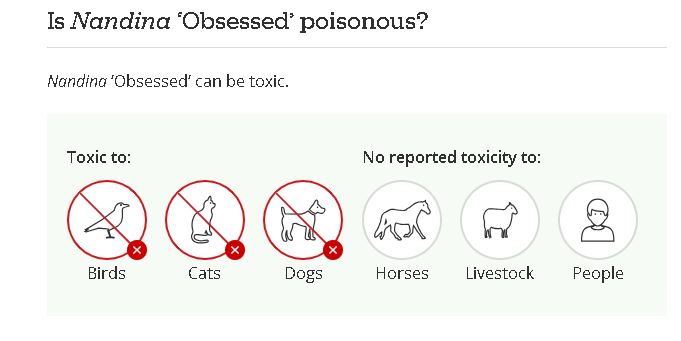
<p>There are many many poisonous plants in gardens, many of which your pet will naturally avoid, as we humans do too, but it is good to know which plants are toxic to pets, and these can be avoided.</p>

<p>When choosing plants – the plant label will often state this but do some research online.</p>

<p>Sites such as ‘Gardeners World’ state if they are toxic to pets, as will The Royal Horticultural Society.</p>

<p><img src="/assets/img/blog6_img2_toxic.JPG" alt="toxicplants" />
<em>Information from the ‘Gardeners World’ website showing plant toxicity</em></p>

<h3 id="dogs">Dogs</h3>
<p>Dogs come in all shapes and sizes.</p>

<p>Some like to dig, others are chasers, there are barkers and those who just enjoy sitting in the sun getting their tummy tickled.</p>

<p><img src="/assets/img/Blog6_%20img3_Fern2.jpeg" alt="FernTheDog" /></p>

<p>How does your dog behave?</p>

<p>Are they old, young, curious, and/or well-trained?</p>

<p>How your dog behaves will be a factor in the design solution for the garden.</p>

<p>For example, raised beds may work as a deterrent for small or older dogs to stop them from going in your flower beds.</p>

<p>Do you want specific parts of the garden for a dog play or exercise space where you can have toys for entertainment and exercise.</p>

<p>Does the garden need to be enclosed to stop a pet escape ?</p>

<p>Would you like a source of clean drinking water for your dog, or an outdoor shower area so muddy pets can be cleaned before entering the house?</p>

<p>These are some typical considerations when planning a dog-friendly garden.</p>

<p>Lawns are one of the big areas that get damaged by dogs, either through constant wear and tear from running, digging, or damage from urine.</p>

<p>If your dog likes to dig, think about creating an area specific to them for digging.</p>

<p>If they run the same way every time, say along a track, consider putting in moveable obstacles so they have to vary their running route.</p>

<p>To reduce the damage to your lawn from urine, rinse the area with water.</p>

<p>You can also get products to treat the area and neutralise it.</p>

<p>Better still, where possible train the dog to use a dedicated discrete place and protect the rest of the lawn.</p>

<h4 id="dogs-and-plants">Dogs and plants</h4>

<p>Do your research, before selecting plants. The <a href="https://www.dogstrust.org.uk/dog-advice/health-wellbeing/at-home/poisonous-plants">Dog Trust</a> has a helpful list:</p>

<h3 id="cats">Cats</h3>

<p>Cats love to explore and hide, so having trees and bushes is a good idea giving them climbing places and hidey spaces.</p>

<p>You could also try planting textural grasses that cast shadows and move in the wind, for a bit of extra fun.</p>

<p><img src="/assets/img/blog6_img4_grasses.jpg" alt="Grasses" /></p>

<p>The bark of trees or even a rough log are perfect for cats to use as scratching posts and don’t forget the clean drinking water.</p>

<p>If you like to see birds in the garden, be careful where you place bird feeders, not near bushes where the cat can hide and pounce.</p>

<p>You could also put obstacles on the post to make it hard for the cat to climb.</p>

<h4 id="plants-and-cats">Plants and cats</h4>

<p>There are numerous plants that cats like and are attracted to.</p>

<p>The most famous one is <em>Nepeta</em>, commonly known as catnip.</p>

<p>Cats love the smell and rolling in it, so make sure you plant some.</p>

<p>It will also attract bees to the garden.</p>

<p>There are many plants that are toxic to cats such as narcissus (daffodils).</p>

<p>Alliums and all lilies are poisonous to cats.</p>

<p>Luckily most cats are fussy eaters and will avoid them, but it’s good to know what is dangerous to your cat.</p>

<p>So do some research before choosing plants for the garden.</p>

<p>Organisations like the Cat Protection League can provide helpful information.</p>

<p>The <a href="https://hta.org.uk/potentiallyharmfulplants">Horticultural Trades Association</a> provides information on toxic plants to pets and humans.</p>

<h3 id="pet-friendly-gardens">Pet-friendly Gardens</h3>
<p>Creating a garden for you and your pets is a challenge, but worth it!</p>

<p>Like all design challenges it is about making the garden work for all the family and by considering your pets in the planning of your garden, so it is safe, fun, and rewarding.</p>

<p>That way the whole family will benefit by keeping your furry friends happy.</p>]]></content><author><name>Anna</name></author><category term="chat" /><category term="chat" /><summary type="html"><![CDATA[Designing your new dream garden needs to consider the wants and needs of the whole family including your furry friends.]]></summary><media:thumbnail xmlns:media="http://search.yahoo.com/mrss/" url="https://www.blackwoodgardens.co.uk/Blog6%20_Fern_headshot.jpg" /><media:content medium="image" url="https://www.blackwoodgardens.co.uk/Blog6%20_Fern_headshot.jpg" xmlns:media="http://search.yahoo.com/mrss/" /></entry></feed>